


When Africa Goes Digital, Who Gets Left Behind? Experts Sound the Alarm at the 2026 Inclusive Africa Conference
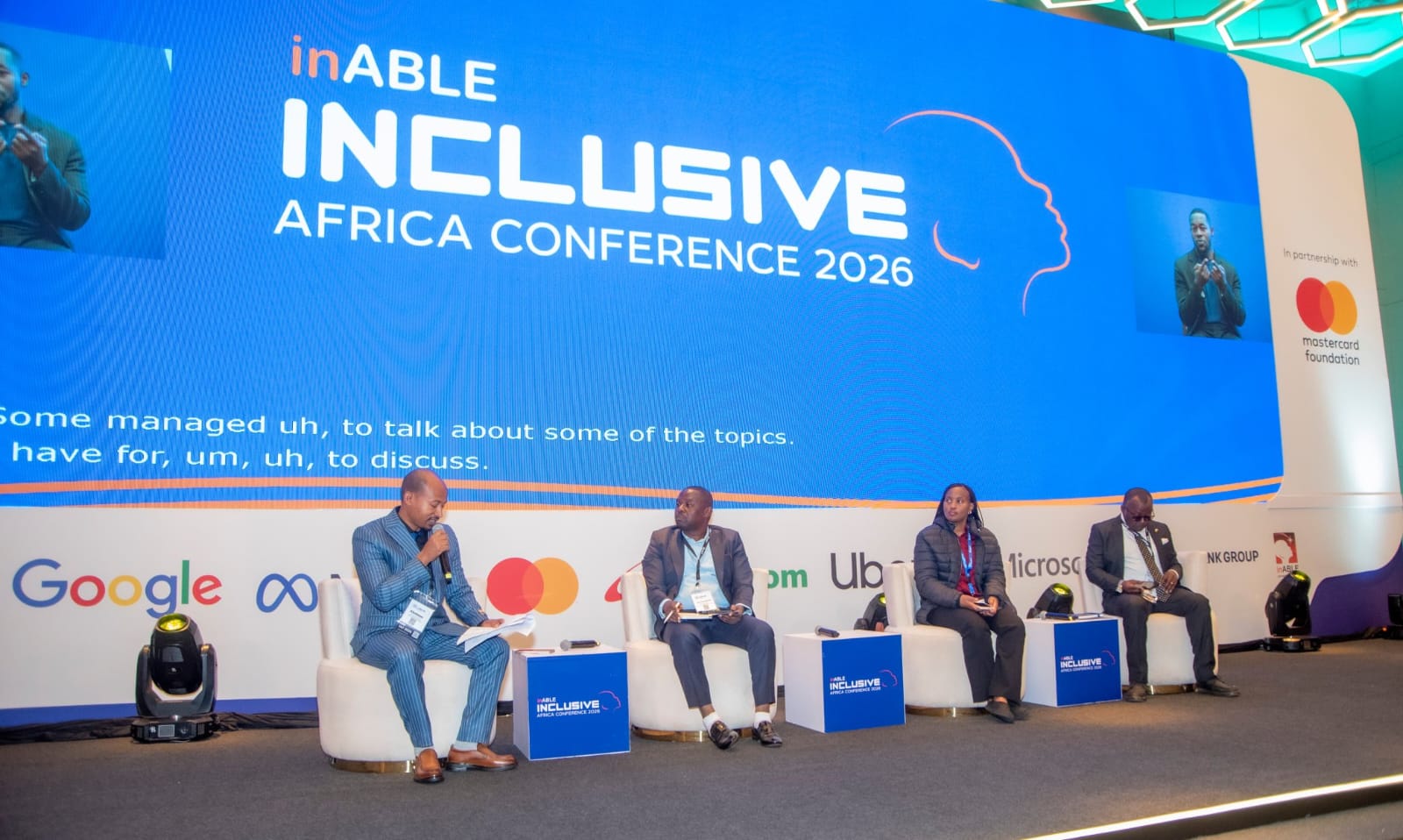
There is a version of Africa’s digital future in which artificial intelligence expands access to healthcare for communities that have never had a doctor, in which voice-activated interfaces give blind users full control of financial services for the first time, and in which local language AI tools finally make government information accessible to every citizen regardless of literacy level or disability. That future is possible. It is also not guaranteed. And at the 2026 Inclusive Africa Conference held in Nairobi this week, some of the continent’s most respected technology leaders and disability rights advocates came together to deliver a frank warning: the version of Africa’s digital future currently being built is on course to exclude tens of millions of persons with disabilities, and the decisions being made right now, at the design stage of AI products and digital services, will determine which version of the future actually arrives.
This is Able Path Africa’s detailed account of what was said at IAC 2026, who said it, what the data shows, and what it means for persons with disabilities across Sub-Saharan Africa.
From Connectivity to Meaningful Access: The Conversation Has Shifted
For most of the 2010s, the dominant narrative around digital inclusion in Africa was a connectivity story. The continent lacked fibre infrastructure. Mobile data was too expensive. Rural communities had no internet signal at all. These were real problems and they attracted real investment: submarine cable projects, mobile network expansion, satellite internet initiatives, and government universal service funds. Progress was made. Mobile internet penetration grew substantially across the continent.
But the conversation at IAC 2026 reflected a fundamental shift in how the most informed voices in this space are now framing the problem. The question is no longer primarily whether Africans can get online. For a significant and growing portion of the continent’s population, internet connectivity is now available. The question is whether, once online, the digital world they encounter was built with them in mind.
Irene Mbali Kirika, founder of InABLE, a Nairobi-based nonprofit that has spent over a decade working on digital accessibility for learners with visual impairments and other disabilities, put this shift into precise language at the conference. Internet services, she observed, are widely available across many parts of the continent but are not being fully unlocked to reach their true potential. The bottleneck has moved. It is no longer at the infrastructure layer. It is at the product layer, where developers make the decisions that determine whether a website can be navigated by a screen reader, whether a mobile application includes audio descriptions, whether a chatbot can handle inputs from users with cognitive or motor disabilities, whether an AI-powered service was tested with anyone who lives with a disability before it was released to the public.
This distinction matters enormously for how resources and policy attention should be directed. Infrastructure investment, while still important in underserved communities, does not solve the accessibility design problem. An accessible broadband connection to an inaccessible website leaves a blind user no better off than no connection at all.
The Data: A Continent of Compounding Exclusions
The figures shared at IAC 2026 give concrete shape to the scale of the exclusion being discussed. Women in Africa are 29 percent less likely than men to use mobile internet. This is a gap driven by a combination of economic inequality, social norms around technology ownership, and literacy differences that are themselves products of historical underinvestment in girls’ education. For women with disabilities, this gender gap compounds with a disability gap, creating a population that faces double exclusion from the digital economy: once because of gender, and again because the products and services that are available were not designed with their specific access needs in mind.
Low-income populations face the cost barrier most acutely. Massi Ndeghu, the Director of Public Policy for Sub-Saharan Africa at Meta, shared data at the conference showing that taxes on mobile devices account for as much as 30 percent of the cost of a handset in some African markets, and rise to as high as 50 percent in others. This is not a marginal price increase. In a region where a large proportion of the population lives on the equivalent of a few dollars per day, a 30 to 50 percent tax premium on the device through which all digital services are delivered is a structural barrier to access. For persons with disabilities, who on average experience higher rates of poverty than the general population, this cost barrier is particularly severe.
Ndeghu also pointed to the positive side of the infrastructure equation, noting that submarine cable investments spanning 22,000 kilometers are underway and expected to improve connectivity and reduce data costs over time as more bandwidth becomes available. These are real investments and they will matter. But the experts at IAC 2026 were unanimous that infrastructure improvements, however necessary, will not by themselves address the accessibility design gap that sits at the heart of the digital exclusion problem facing persons with disabilities.
The AI Question: Opportunity or New Source of Exclusion?
Artificial intelligence dominated the substantive discussions at IAC 2026 in a way that previous editions of the conference had not seen. This reflects where the technology industry is right now. AI is no longer a research topic or a distant prospect. It is being embedded into the tools that Africans use every day: search engines, customer service platforms, financial apps, healthcare information systems, educational software, and government service portals. The design decisions being made by developers building these AI systems will shape the lived experience of persons with disabilities on the continent for years to come.
David Haynes, the Chair of the Global Disability Innovation Hub, offered one of the most substantive contributions to this debate at the conference. He began from a point that many in the room would not have expected: Africa’s healthcare infrastructure is so stretched that AI tools designed thoughtfully could genuinely expand access to services that are currently simply unavailable. He cited the fact that the African continent has only six to seven mental health professionals per 100,000 people, compared to hundreds in the United States. For persons with psychosocial disabilities or mental health conditions who live in rural parts of Africa, the choice is not currently between a human therapist and an AI tool. The human therapist is not there. In that context, a well-designed AI mental health support tool could provide something where nothing currently exists.
This is a genuinely important observation and it challenges some of the more reflexive dismissals of AI in healthcare that circulate in global disability rights discourse. For high-income countries with functioning health systems, the concern that AI might displace trained professionals has real substance. For a continent where the ratio of mental health professionals to population is two orders of magnitude lower than in wealthier nations, the relevant question is different: can AI fill gaps in service access, particularly for persons with disabilities who face the most acute exclusion from existing services?
But Haynes did not leave his analysis there. He also raised a warning that disability organizations across the continent need to take seriously. The automation of entry-level roles, he observed, could disproportionately harm young persons with disabilities entering the workforce. This is a structural concern that goes beyond individual AI products to the broader shape of Africa’s labour market. In many African economies, entry-level jobs in data entry, customer service, administration, and basic processing are important pathways to formal employment for persons with disabilities, who often face discrimination in hiring for roles that require more seniority or perceived competitive performance. If AI automates those roles before alternative pathways to employment have been developed, the result could be a shrinking of the already narrow employment options available to persons with disabilities across the continent.
Ndeghu of Meta offered a framing of AI that positions it as technology that does what humans do but more efficiently, at greater scale, and faster, inherently informed by human data. The phrase “inherently informed by human data” is the one that disability advocates should focus on. If the human data used to train AI systems is drawn primarily from populations without disabilities, the systems produced will reflect the needs, preferences, and interaction patterns of those populations. They will not reflect the needs of persons who rely on screen readers, who communicate through augmentative and alternative communication devices, who process information differently due to cognitive disabilities, or who navigate the world with physical impairments. The result is AI that works well for most users and poorly or not at all for the users who most need it to work.
Language, Local Knowledge, and Assistive Technology
Ann Salim, Senior Product Manager at Kala, contributed a dimension to the discussion that connects the accessibility question to the broader challenge of African linguistic diversity. She noted that with over 2,000 local languages spoken across the continent, technology companies are now investing in Large Language Models trained on African language datasets. This investment matters for disability inclusion in ways that are not always immediately obvious.
For a person with a visual impairment in Lagos who relies on a screen reader, the question is not simply whether a screen reader exists. It is whether the screen reader works in Yoruba, or Igbo, or Hausa, or the specific regional language that person grew up speaking and in which they navigate information most fluently. For a person with a hearing impairment in Kampala, the question is whether sign language interpretation in Ugandan Sign Language is available on government platforms, not just in English or international sign. For a person with a cognitive disability in Accra who benefits from simplified language interfaces, the question is whether simplified Twi is as accessible as simplified English.
The expansion of African language AI datasets is genuinely positive news for disability inclusion on the continent. But it requires deliberate integration with assistive technology development to translate into actual accessibility improvements. Technology entities investing in large language models for African languages need to simultaneously invest in ensuring those models power accessible interfaces that work for users with disabilities across those language communities.
The Core Demand: Design for Disability From Day One
The experts at IAC 2026 returned repeatedly to one practical recommendation that applies regardless of whether the technology under discussion is AI, mobile applications, government portals, financial platforms, or educational software: developers and product teams must test their products with persons with disabilities during the design process, not after launch.
This is the principle of universal design, applied to the digital world. It is not a new idea. The Web Content Accessibility Guidelines (WCAG), which set international standards for digital accessibility, have existed in various versions since the late 1990s. What is new is the scale and speed at which digital products are being deployed across Africa, and the degree to which those products are incorporating AI in ways that make post-hoc accessibility retrofits significantly more difficult than they would be for simpler software.
An AI system that was trained without data from users with disabilities, that was not designed with accessible input and output modalities, and that was not evaluated for its impact on persons with disabilities before deployment, is not a system that can easily be made accessible after the fact. The training data, the model architecture, and the interface design are baked in. Accessibility becomes exponentially more expensive to add later than to build in from the start. This is why the message from IAC 2026 is not “add accessibility features eventually.” It is “make accessibility a non-negotiable design requirement from the first day of product development.”
What African Disability Organizations Should Do With This
The discussions at IAC 2026 have implications that extend well beyond the conference floor and into the day-to-day work of disability organizations, advocacy groups, and civil society institutions across the continent.
First, disability organizations need to engage with technology policy processes. In every African country, governments are developing AI strategies, digital economy frameworks, data governance policies, and ICT procurement regulations. These processes largely happen without meaningful input from disability communities. That absence means accessibility rarely becomes a requirement. Disability organizations have an urgent interest in inserting themselves into these policy conversations and ensuring that digital accessibility standards become part of the regulatory landscape governing technology products sold to and used by governments and citizens.
Second, disability organizations need to develop the technical literacy to engage credibly in technology debates. Advocacy that speaks only in general terms about the need for inclusive technology will not move the needle with developers, product managers, and government technology officers who deal in specifics. Knowing what WCAG compliance means, understanding the difference between accessible and inaccessible AI training datasets, and being able to articulate specific technical requirements for assistive technology compatibility are skills that the disability rights movement in Africa increasingly needs to build.
Third, and perhaps most importantly, persons with disabilities themselves need to be at the table where technology is being designed. Not as focus group participants consulted after the key decisions have been made. As product developers, engineers, data scientists, user researchers, and policy leads. The most powerful argument that IAC 2026 makes for disability-inclusive technology is not a legal or a moral argument, though those matter. It is a practical one: technology that is designed by people with diverse abilities, including persons with disabilities, is better technology. It serves more users. It solves more problems. It is more robust to the range of ways that humans actually interact with digital systems.
Africa is building its digital future right now. The IAC 2026 conference was a reminder that the window to get this right is open, but it will not stay open indefinitely. Every product launched without accessibility built in, every AI system trained on non-representative data, and every technology policy written without disability input is a decision that will be harder and more expensive to reverse later than to get right today.
Source: Capital FM Nairobi, reporting by Spencer Walela, published June 5, 2026. Distributed via AllAfrica. Able Path Africa is an independent disability news platform and is not affiliated with the Inclusive Africa Conference or its organizers.