
The App That Could Save Deaf Lives Won Nigeria’s Biggest Girls in Tech Competition. Its Creators Are Schoolgirls From Bauchi State, Nigeria.
There is a moment, somewhere between the diagnosis and the prescription, where the healthcare system fails deaf patients in Nigeria with a consistency that is so ordinary it has stopped being noticed. The doctor asks a question. The patient cannot hear it. The patient tries to explain what they feel. The doctor cannot understand them. Notes are passed back and forth, fingers are pointed at body parts, expressions of confusion and frustration accumulate on both sides of the consultation, and somewhere in that breakdown of communication, the margin for medical error opens wide. Some deaf patients in Nigeria never go back to the hospital after an experience like this. Some of them suffer preventable harm because of it. Some of them, as a group of schoolgirls from Bauchi State understand from direct, daily, painful observation, lose their lives because of it.
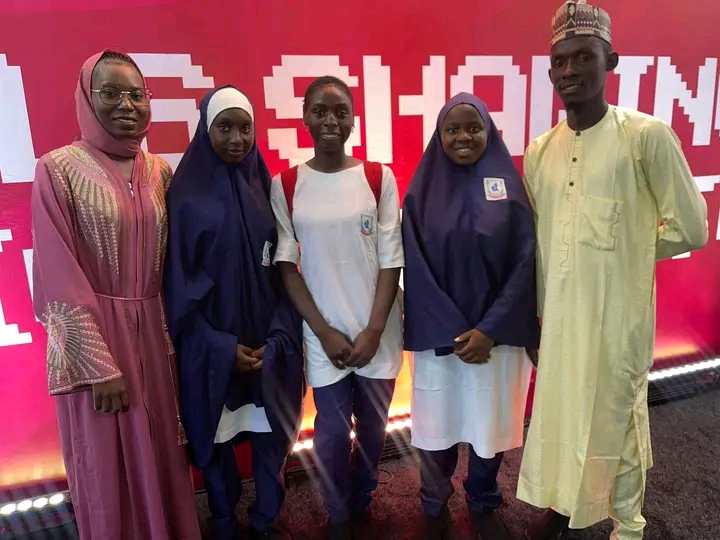
Those schoolgirls decided to solve the problem. They called their solution SignCare. They presented it at the 2026 National Girls in ICT Competition at the State House Conference Centre in Abuja on Friday, June 6, under the team name Hands That Speak. And out of more than 3,700 girls from schools across all six geopolitical zones of Nigeria, competing in one of the country’s most competitive technology innovation events, they were named the overall national champions.
This is the story of what they built, why it matters, how the competition worked, and what this victory represents for disability inclusion in Nigeria’s technology sector.
The Problem That Inspired SignCare
Aisha Bala, the student innovator who spoke on behalf of the Hands That Speak team at the award ceremony, chose not to open with technical specifications or a feature list. She opened with people. Specifically, with the deaf people she knows: in her school, in her community, in her neighbourhood. People who are navigating a country in which the healthcare system, by and large, was not built with them in mind.
What she described is not an abstract policy problem. It is a daily reality. Deaf patients across Nigeria, when they seek medical care, encounter healthcare providers who have received no training in communicating with deaf patients, who do not know sign language, who have no accessible communication tools available in their facilities, and who have no protocol for ensuring that the patient has understood the diagnosis or the instructions for treatment. The result, Bala explained with remarkable composure for someone her age addressing a national audience, is that many deaf patients struggle to communicate their symptoms effectively to doctors. Delays in diagnosis and treatment follow. And in some cases, she said, deaf patients lose their lives because of the absence of communication between the patient and the medical professional treating them.
She was not generalizing from a textbook. She was speaking about people she lives with and around. This is one of the things that makes the SignCare story different from many technology innovation competition entries. It was not designed as an abstract exercise in problem-solving. It was designed because the designers live adjacent to the problem every day and found the absence of a solution unacceptable.
What SignCare Does
SignCare is described in competition documentation as a digital health accessibility platform built to improve communication between deaf patients and healthcare providers. In practical terms, it is a mobile application designed to function in the specific context of a medical consultation, where a deaf patient and a hearing healthcare provider need to exchange precise and often technically complex health information across a communication barrier that, without a bridge like SignCare, neither party has the tools to cross.
The platform provides a structured digital interface through which deaf patients can communicate their symptoms, medical history, current medications, allergies, and immediate concerns to a healthcare provider. It allows the provider to communicate diagnoses, instructions, prescriptions, follow-up requirements, and referrals back to the patient in a format the patient can read, understand, and if needed, save and reference later. The application is designed to work in the context of a standard medical consultation, which means it has been built with consideration for the time pressures and workflow realities of Nigerian healthcare settings.
The specifics of how sign language input is processed, whether through video interpretation, symbol selection, or text-based input methods, and the precise design of the interface are details that the team presented at the competition. What is clear from the competition’s outcome is that the judges, a group of technology and innovation professionals, found the solution sufficiently functional, sufficiently scalable, and sufficiently impactful to rank it above every other entry from every other school in the country.
The Competition: Scale, Structure, and Context
To understand the scale of this achievement, it helps to understand what the 2026 National Girls in ICT Competition is and how it works. The competition is organized by the Federal Ministry of Communications, Innovation and Digital Economy and is now in its third year at the national level, though this iteration was described by the Vanguard as the fourth edition, reflecting different counting of regional and national stages. It is sponsored by the Korea International Cooperation Agency (KOICA), the National Information Technology Development Agency (NITDA), and the Nigerian Postal Service (NIPOST), and it is explicitly designed as a vehicle for identifying and investing in female technology talent across all six of Nigeria’s geopolitical zones.
In 2026, the competition engaged over 3,700 girls from schools across all 36 states of the federation and the Federal Capital Territory. From this pool, regional competitions were held in each geopolitical zone, producing one finalist team per zone for the national grand finale. The six finalist teams that competed at the State House Conference Centre on June 6 therefore represented the best from six regional competitions, each of which had drawn from hundreds of schools and thousands of participants. The national champion was selected from these six, making the Bauchi team’s victory the culmination of a competition process that spanned the entire country.
The six finalist teams and their projects were as follows: first place, Hands That Speak (Special Education Centre, Bauchi, North-East zone) with SignCare, a digital health platform for deaf patients; second place, Team Divas (Federal Government Girls’ College, Cross River, South-South zone); third place, Team Resonance (Resonance Science School, Abia, South-East zone); fourth place, Team FarmShield 360 (Kano State, North-West zone) with an AI-powered farm protection system; fifth place, Team Tech Expert (Federal Capital Territory, North-Central zone); and sixth place, Team Elite (Osun State, South-West zone). The range of projects, spanning healthcare accessibility, agricultural AI, and various other domains, illustrates the breadth of innovation that the competition draws out. That the disability-focused healthcare project won is a statement about the quality of execution as much as the importance of the problem being solved.
The Night of the Award: First Lady, Minister, and a Message That Resonated
The grand finale and awards dinner were held at the Presidential Villa in Abuja, with First Lady of Nigeria Senator Oluremi Tinubu attending as Special Guest of Honour. Her presence elevated the occasion and signaled the kind of political attention that competitions of this type need to secure sustained government backing. Senator Tinubu praised the participants for their creativity, innovation, and determination to use technology to solve real problems, and issued a challenge to the finalists that has direct relevance to disability inclusion: remain curious, confident, and courageous, she told them, and never underestimate the power of your ideas. Continue to learn, create, and use technology not only to solve problems but to uplift others.
The Minister of Communications, Innovation and Digital Economy, Dr. Bosun Tijani, who hosted the event and has been a consistent advocate for expanding digital opportunity to underrepresented groups in Nigeria’s technology sector, made a statement at the grand finale that speaks directly to the disability dimension of the Bauchi team’s win. Talent exists in every part of the country, he said. Nigeria’s digital economy cannot reach its full potential if girls and women are left behind. The same logic applies with full force to persons with disabilities and to the institutions that serve them. Special education centers, schools for learners with hearing impairments, institutions serving students with visual or physical disabilities, are not peripheral to Nigeria’s technology future. As the Bauchi team has demonstrated, they are incubating some of its most important innovations.
Tijani also announced at the event that the Ministry was introducing Code Clubs and distributing club kits to participating schools, described as strategic investments in Nigeria’s future technology innovators. Whether special education centers like the one in Bauchi are among the schools receiving these Code Club resources is a question worth asking, and worth following up on. If the answer is yes, it would be a concrete step toward ensuring that the pipeline for disability-inclusive innovation continues to be nurtured. If the answer is no, it would be an opportunity gap worth closing before the next competition cycle.
Why This Win Carries More Weight Than a Competition Result
The national championship belongs to Hands That Speak. But the implications of their victory extend well beyond the award. They unfold across several dimensions that matter for disability inclusion in Nigeria’s technology and education landscape.
The first implication is about who gets to be an innovator. Nigeria’s technology narrative has historically been centered on a relatively small number of cities, a relatively small number of educational institutions, and a relatively narrow demographic profile of people who are understood as the country’s technology innovators. A national championship won by a special education center in Bauchi, a city in the North-East that has lived through significant security instability over the past decade and that sits outside the geography most commonly associated with Nigeria’s tech economy, challenges every dimension of that narrow narrative. Innovators come from everywhere. Disability does not disqualify a person from building technology. The North-East is as capable as Lagos.
The second implication is about whose problems get solved. Most technology products in Nigeria, as in most of the world, are designed by people who do not have disabilities, for users they imagine as being like themselves. The result is a technology ecosystem that works well for the majority and poorly for the margins. SignCare was built by people who understand deafness from lived proximity. They know the problem from the inside, in a way that no amount of secondary research can fully replicate. This is what produces technology that addresses real needs rather than assumed ones.
The third implication is about what happens next. A competition win creates visibility. Visibility creates opportunity. What SignCare needs now is investment, whether from NITDA, from private healthcare companies, from international digital health funders, or from NGOs working on disability-inclusive healthcare in Nigeria, to move from a school project that won a competition to a deployed product that is actually reducing preventable deaths among deaf patients in Nigerian hospitals. That transition is not automatic. It requires a deliberate effort by the healthcare sector, the technology investment community, and disability organizations in Nigeria to support the team and their innovation through the stages of development, testing, regulatory engagement, and deployment that separate a promising prototype from an active public health tool.
A Challenge to Nigeria’s Healthcare, Technology, and Disability Sectors
Schoolgirls from Bauchi have identified a problem that costs lives, built a digital solution to address it, and won a national competition against over 3,700 competitors from across the country. They have done their part. The question now is what Nigeria’s healthcare system, its technology sector, its disability organizations, and its government will do with what they have created.
Accessible healthcare communication tools for deaf patients are not a luxury or a niche product for a small market. An estimated 4 to 5 percent of the global population lives with some degree of hearing impairment, and Nigeria’s 200-million-plus population makes even a conservative estimate of the deaf and hard-of-hearing community in the country a figure in the hundreds of thousands, potentially millions. Every one of those individuals will need healthcare at some point. Every one of them faces the communication barrier that SignCare is designed to address.
The Bauchi team has shown that the solution is buildable, that it is fundable, and that it can win on its merits in open competition with any other technology innovation in the country. It now needs champions in the healthcare system, the technology investment community, and the disability rights space to carry it from the competition stage to the clinic.
Sources: Vanguard Nigeria, June 7, 2026; Punch Nigeria; News Agency of Nigeria (NAN); Guardian Nigeria; The Sun Nigeria; Nigeria Startup Act Network; TV360 Nigeria; Edugist. Able Path Africa is an independent disability news and opportunities platform.