
Nigeria Made Commitments to 35 Million People with Disabilities at the Global Disability Summit. Advocates Are Now Demanding the Receipts.
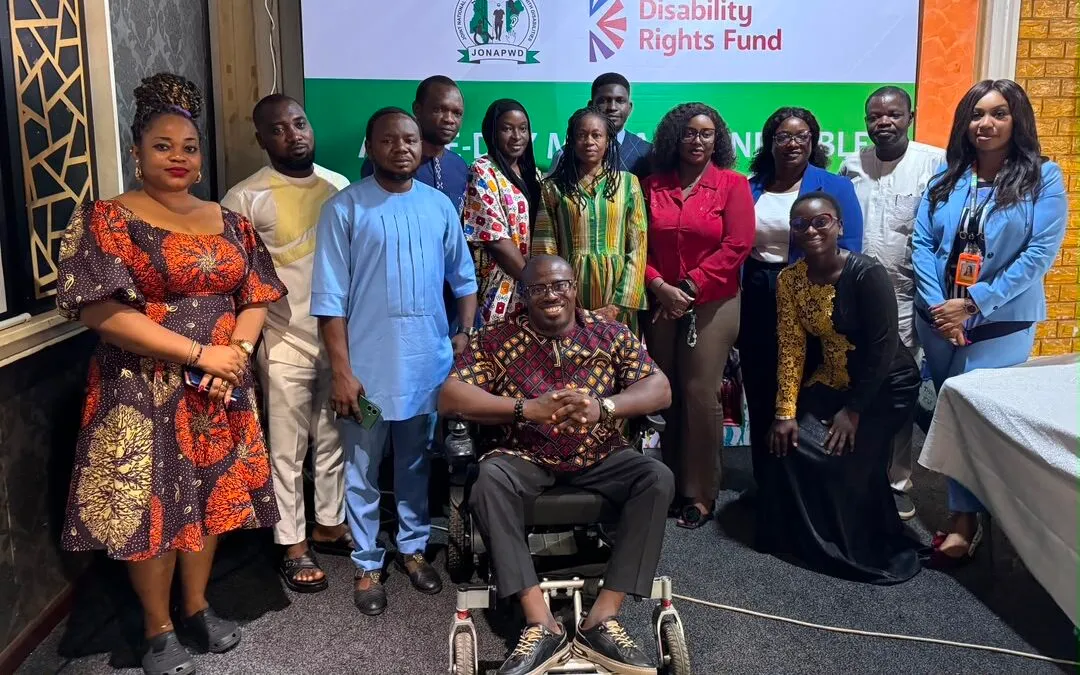
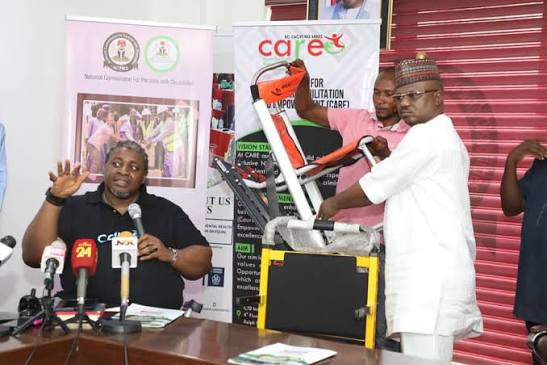
At a media roundtable held in Abuja on Wednesday, June 3, 2026, disability rights advocates in Nigeria did something that does not happen often enough in African policy spaces: they sat down with journalists, opened the government’s own commitments document, and went through it line by line, pointing out what had been promised, what deadline had been set, what had been done, and what had not.
The document in question is the Nigeria 2025 Global Disability Summit Commitments Action Plan, developed by organisations of persons with disabilities in collaboration with the National Commission for Persons with Disabilities and with support from the Disability Rights Fund. It outlines specific, time-bound commitments made by the Nigerian government at the world’s largest platform dedicated to advancing disability rights and inclusion. The roundtable was organized to ensure that journalists, who have a critical role in monitoring implementation, understand what those commitments are and know how to report on whether they are being kept.
What emerged from the session was a picture of significant ambition, genuine legal and policy progress in some areas, and a persistent and urgent gap between the commitments Nigeria has made to its 35 million citizens with disabilities and the concrete implementation that would make those commitments real.
Understanding the Global Disability Summit and Why It Matters for Nigeria
Before examining what Nigeria committed to and what advocates are now demanding, it is worth understanding the context in which these commitments were made. The Global Disability Summit (GDS) is the world’s largest dedicated platform for disability-inclusive development, bringing together governments, United Nations agencies, civil society organisations, the private sector, and organisations of persons with disabilities to make concrete, accountable commitments that advance disability rights globally.
Nigeria’s participation in the GDS and the commitments its government made through that process are not merely diplomatic gestures. They are publicly recorded, internationally monitored pledges. When a government makes a commitment at the GDS, it is committing in front of the global disability community, including all the international development partners, bilateral donors, and UN agencies whose funding and cooperation Nigeria depends on in multiple sectors. The credibility of those commitments, and the government’s track record in keeping them, has real consequences for Nigeria’s standing and its access to international support.
The advocates at the June 3 roundtable framed their accountability demands explicitly in these terms. They are not asking the government to do something new. They are asking it to deliver on what it already said it would do, in front of the world, at a summit whose explicit purpose is to hold governments accountable.
The Commitment on Digital Information Accessibility
Bukunmi Adejumo, Programme Officer of the Joint National Association of Persons with Disabilities (JONAPWD), represented the organization’s National President at the roundtable and delivered the most detailed account of the commitments and their current implementation status.
One of the commitments she highlighted as particularly significant, and particularly relevant to the media organizations present at the roundtable, relates to digital information and communication accessibility. The Nigerian government has committed to ensuring that the National Broadcasting Commission implements disability-inclusive and accessible broadcast services by December 2027. This includes wider use of sign language interpretation on television broadcasts, audio captioning across broadcasting operations, and other accessibility measures that would allow Nigerians with hearing or visual impairments to access the same broadcast information available to the general public.
The government has also committed to consulting persons with disabilities and their representative organisations in the design and development of accessible digital information and communication platforms. This is a commitment to process, not just to outcome. It means that when government agencies and broadcasters are deciding how to build their digital platforms, how to structure their online information, and how to deliver services digitally, persons with disabilities must be at the table as participants in those decisions, not merely as the intended beneficiaries of decisions made without them.
Adejumo was precise about why this matters to journalists specifically: disability inclusion in broadcast and digital media is not a niche concern for a specialized sector. It is the foundation on which every other form of participation rests. A citizen who cannot access news, cannot access public information, cannot follow parliamentary debates, and cannot engage with political discourse online is not a fully participating member of a democratic society, regardless of what the law says about their rights. Digital information accessibility is the infrastructure on which political, economic, and social inclusion are built.
Financial Inclusion: The Banking Commitment and Its 2028 Deadline
Nigeria’s GDS commitments include a specific, measurable target on financial inclusion. The government has undertaken to ensure accessible banking services and facilities across financial institutions by June 2028. The target is concrete: at least 75 percent of banks operating in Nigeria are to provide services that are accessible to persons with disabilities within that timeframe.
This commitment matters because financial exclusion is one of the most consequential barriers that persons with disabilities face in Nigeria. A person who cannot access a bank account cannot save securely, cannot receive formal employment income, cannot access credit, cannot pay bills electronically, and cannot benefit from the financial services on which modern economic participation depends. In a country where mobile money and digital banking are rapidly replacing cash and in-person transactions as the normal mode of financial life, inaccessible banking infrastructure is not merely an inconvenience. It is a mechanism of economic exclusion.
The earlier Abuja policy dialogue organized by the Empower to Thrive Development Initiative in February 2026 had highlighted this same issue. Participants at that dialogue recalled that a recommendation from a 2025 stakeholders’ meeting had called for dedicated service desks in banks and financial institutions specifically designed to improve access to micro-credit and tailored financial services for persons with disabilities. The fact that this recommendation was still being raised as unimplemented in 2026 illustrates the distance between commitment and delivery that the June 3 roundtable was designed to highlight.
The 2 Percent Revenue Commitment: A Funding Floor That Does Not Yet Exist
Of all the commitments outlined at the roundtable, the one with the most transformative potential and the most uncertain implementation trajectory is the pledge around disability funding. The Nigerian government has committed to pursuing legislation that would allocate at least two percent of the country’s annual consolidated revenue to disability inclusion initiatives across sectors by December 2026.
The significance of this commitment cannot be overstated. Nigeria’s consolidated federal revenue is measured in tens of trillions of naira. Two percent of that figure, directed specifically to disability inclusion across sectors, including education, health, infrastructure, employment, and social protection, would represent a level of resourcing for disability-inclusive development that does not currently exist anywhere in sub-Saharan Africa at scale. It would move Nigeria from a country that has disability legislation to a country that has disability funding, which is a fundamentally different proposition.
The deadline of December 2026 is six months away. The commitment is to pursuing legislation, not to passing it, which gives the government a degree of room to argue compliance through the initiation of a legislative process even if the legislation itself has not yet been enacted. But advocates at the roundtable made clear that the spirit of the commitment is to have a functioning funding mechanism in place, not merely a bill in a committee. They are watching this deadline with particular attention and have indicated that organisations of persons with disabilities will serve as accountability watchdogs, tracking progress and engaging government institutions directly on any shortfall in implementation.
Inclusive Education: The Most Urgent Crisis
Adejumo did not hold back in her assessment of the current state of inclusive education in Nigeria. She described it plainly as inadequate. Many children with disabilities remain completely out of school. Those who are enrolled frequently face conditions that do not merit the description of inclusive: segregated classrooms, environments with physical barriers, teachers who have received no training in disability-responsive pedagogy, and an absence of the assistive technologies and adapted learning materials that would allow them to learn on equal terms with their peers.
The scale of the out-of-school problem in Nigeria is severe even before disability is considered. UNICEF estimates that Nigeria has millions of primary school-aged children who are not in school. When disability is added to the analysis, the exclusion rates are significantly higher. Children with visual impairments, hearing impairments, physical disabilities, intellectual disabilities, and multiple disabilities are among the most consistently out-of-school populations in the country, and this exclusion has lifelong consequences that compound every other form of disadvantage they experience.
The government’s GDS commitment in this area sets a target of ensuring that 70 percent of out-of-school children with disabilities are returned to school by 2028 through inclusive education policies and programmes. This is an ambitious target. Meeting it would require not only policy change but significant physical infrastructure investment to make schools accessible, major investment in teacher training at both pre-service and in-service levels, procurement and distribution of assistive learning technologies at scale, and sustained community engagement in areas where stigma around disability continues to prevent families from enrolling children with disabilities in school.
Adejumo’s message on this point was unambiguous: commitments alone will not solve the problem. Action, budget allocation, and monitoring with consequences are what will determine whether 2028 looks any different from 2026 for Nigeria’s out-of-school children with disabilities.
Legal Capacity, Social Protection, and the Right to Make Your Own Decisions
Among the GDS commitments that received less public attention but that advocates at the roundtable described as deeply important is the commitment around legal capacity. Nigeria, like many countries, has historically operated legal frameworks that allow courts or family members to strip persons with intellectual or psychosocial disabilities of their right to make their own decisions, through mechanisms such as guardianship orders and substituted decision-making arrangements. These mechanisms, while sometimes framed as protective, in practice often deprive persons with disabilities of control over their own finances, healthcare decisions, living arrangements, and personal relationships.
Nigeria’s GDS commitments include a pledge to ensure that persons with intellectual and psychosocial disabilities are able to exercise their legal rights through supported decision-making mechanisms, rather than substituted decision-making arrangements. This is a shift required by Article 12 of the UN Convention on the Rights of Persons with Disabilities, which establishes that persons with disabilities enjoy legal capacity on an equal basis with others in all aspects of life. Implementing it in Nigeria’s legal system will require legislative reform, judicial training, and a cultural shift in how disability and decision-making are understood by families, healthcare providers, and courts.
The Private Sector’s Role: Beyond Token Gestures
One of the most consistent themes across disability policy dialogues in Nigeria in 2025 and 2026 has been the demand for greater private sector accountability on disability inclusion. The June 3 roundtable was no exception. Adejumo called explicitly for companies to move beyond token gestures and to adopt measurable standards that support the participation of persons with disabilities in economic and social life.
This is a demand that Nigeria’s growing corporate sector has the capacity to meet but has not yet been required to. The Discrimination Against Persons with Disabilities (Prohibition) Act 2018, Nigeria’s primary disability legislation, includes provisions relevant to employment and accessibility. But enforcement has been minimal and compliance has been largely voluntary, which means it has been largely optional. The GDS commitments represent an opportunity to shift from a compliance culture built around minimal legal requirements to one in which disability inclusion is understood as a business imperative as well as a legal and ethical obligation.
The argument for the business imperative is compelling on its own terms. Thirty-five million Nigerians with disabilities represent a consumer market of significant scale. Companies that design products and services accessible to this population, that employ persons with disabilities and benefit from their skills and perspectives, and that build accessible physical and digital infrastructure are not doing charity. They are expanding their market and improving their products. The advocates at the roundtable are pressing for this understanding to move from the level of corporate communications into the level of corporate operations and standard-setting.
The Media’s Role: Why This Roundtable Mattered
The choice to hold a disability commitments roundtable specifically for journalists, rather than for government officials or development partners, reflects a strategic understanding of how accountability actually works in democratic systems. Governments are most likely to implement commitments when non-implementation carries a public cost. Public cost requires public visibility. Public visibility requires journalists who understand the issue well enough to report on it accurately and persistently.
JONAPWD’s decision to brief the media on the specific content of the GDS commitments, the timelines attached to each commitment, and the metrics by which implementation can be assessed is an investment in the accountability infrastructure that implementation depends on. It will only pay off if journalists follow through: asking the National Broadcasting Commission what progress it has made on accessible broadcast services, asking banks what percentage of their branches are now accessible, asking the Ministry of Education how many out-of-school children with disabilities have been enrolled since the commitment was made.
Adejumo closed the roundtable with a statement that captures the essence of the advocates’ position: when the next Global Disability Summit is held in 2028, Nigeria’s disability community wants to be able to point to real achievements, not return with the same promises. That is not a sentimental aspiration. It is a precise accountability standard with a concrete deadline. And it is the standard against which Nigeria’s government, its private sector, and the journalists who cover it will all be measured over the next two years.
Primary source: Premium Times Nigeria, reporting by Sharon Eboesomi, published June 3, 2026. Additional context: News Agency of Nigeria; Voice of Nigeria; Global Disability Fund Nigeria Situational Analysis; Legit.ng. Able Path Africa is an independent disability news and opportunities platform.