
Kenya’s Disability Community Has Had Enough of Waiting: The 10-Point Agenda That Could Reshape the 2027 Elections
Kenya passed one of the most progressive disability laws on the African continent in May 2025. It was celebrated. It was described as transformative. International development partners called it a turning point. And then, as so often happens in the space between the signing of a law and its implementation, the celebration faded and the harder work of making the law real began to reveal itself as exactly as difficult as anyone who has worked in disability rights policy knew it would be.
The Persons with Disabilities Act 2025 promises rights to education, healthcare, employment, political participation, and access to public spaces. It mandates that national and county governments integrate disability considerations across all sectors. It reframes disability inclusion as a national development priority rather than a welfare concern. What it does not do, on its own, is ensure that any of these commitments actually materialize in the lives of Kenyans with disabilities.
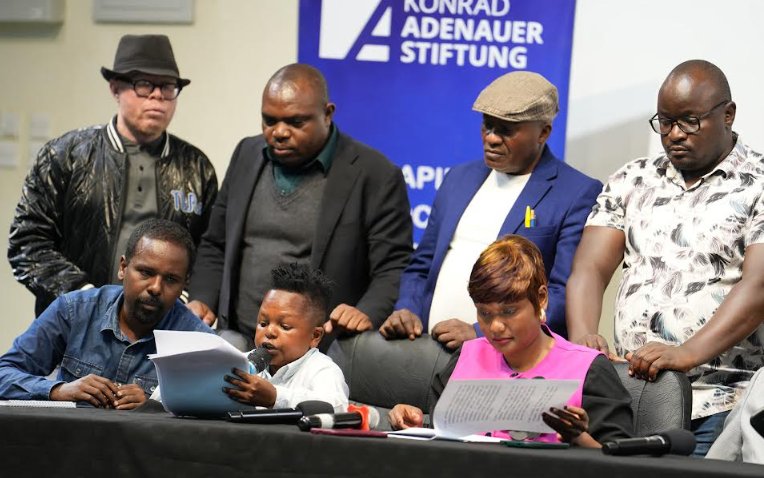
That gap between the law’s promise and its delivery is precisely what Kenya’s disability organizations have now decided to address head-on, with a 10-point agenda launched ahead of the country’s 2027 general elections. This is not a petition asking for sympathy. It is a structured political demand, backed by enforceable legal obligations, timed deliberately to coincide with the moment when Kenyan politicians most need the votes of every organized community they can reach.
Why 2027 Is the Moment
Elections create leverage. They are the moments in any democratic system when politicians are most attentive to the demands of organized communities, when commitments are most readily made, and when the failure to address a large constituency becomes most politically costly. Disability organizations in Kenya, many of which have been doing policy advocacy for years with mixed results, have made a strategic judgment: the period between now and the 2027 general elections is the optimal window to demand specific, measurable commitments from political parties and candidates, and to hold the current administration accountable for what it has already promised.
This is not naive politics. Kenya’s disability community is large. Estimates consistently place the number of Kenyans with disabilities at several million, across a national population of approximately 55 million. This community includes registered voters across all 47 counties, and it includes family members, caregivers, and allies whose votes also respond to how political parties treat disability as a priority. A 10-point agenda framed around the 2027 elections is a way of making this political weight visible and converting it into accountability.
The timing is also shaped by two other concurrent processes. The 2026/27 national budget cycle is underway, and it represents, as UNICEF and the German Embassy in Nairobi wrote jointly in the Standard newspaper in April 2026, the most significant opportunity Kenya has had in years to align its disability law, its national budget, and its international commitments. A law without funding is a declaration without delivery. The 10-point agenda directly addresses this by demanding that disability inclusion appear not only in policy documents but in budget lines.
Additionally, the National Disability Dialogue 2026, convened in May by the government, produced a Baseline Assessment Report on the implementation of the Persons with Disabilities Act 2025. The baseline was sobering. Principal Secretary for Social Protection Joseph Motari acknowledged at the dialogue that while Kenya has made significant progress in strengthening legal protections for persons with disabilities, real transformation depends on effective implementation, which remains incomplete. The 10-point agenda is, in part, a civil society response to that acknowledged implementation deficit.
The Legal Foundation That Makes These Demands Enforceable
Understanding the 10-point agenda requires understanding the legal architecture that gives it force. Kenya’s Persons with Disabilities Act 2025 is not aspirational language. It is a statute with enforceable provisions. Several of its sections are directly relevant to the political inclusion demands at the heart of the agenda.
Section 32 of the Act establishes civic and political rights for persons with disabilities as a matter of law, not merely of policy preference. This includes the right to vote, the right to stand for election, and the right to participate in public life without discrimination. Section 38 establishes the functions of the National Council for Persons with Disabilities, which include monitoring compliance with the Act’s provisions by government ministries and agencies. The Act further mandates that national and county governments integrate disability considerations across education, health, employment, justice, infrastructure, and political participation, meaning that this is not a request to a single ministry to do better. It is a system-wide legal obligation.
The 2025 Act also connects to Kenya’s constitutional framework, particularly Article 54, which provides that persons with disabilities are entitled to be treated with dignity and respect, to access educational institutions and facilities for persons with disabilities that are integrated into society to the extent compatible with the interests of the person, to access all places, public transport and information, to use sign language, Braille or other appropriate means of communication, and to access materials and devices to overcome constraints arising from the person’s disability. The 10-point agenda is not asking for favors. It is demanding compliance with existing constitutional and statutory obligations.
What the 10-Point Agenda Demands
While the full text of the agenda as presented by the coalition of disability organizations covers multiple areas of public life, its central thrust involves the following interconnected demands.
Appointments at All Levels of Government
The most politically prominent demand in the agenda is for appointments of persons with disabilities to positions at every level of government, from the national cabinet and parastatal boards through county executive committees and advisory councils down to ward-level service delivery structures. This demand is grounded in the argument that disability inclusion in government is not merely a matter of consultative participation, where persons with disabilities are invited to comment on policies designed by others, but of decision-making power, where persons with disabilities are among those actually making the decisions that shape national life.
Kenya has made incremental progress on this front. The 2022 general elections saw approximately 600 candidates with disabilities contest various positions, more than any previous Kenyan election cycle. Seven were successfully elected. That is seven out of more than 1,800 elected positions at various levels of government. The gap between that number and proportional representation of a community that accounts for a significant portion of the national population is stark. The 10-point agenda is designed to close that gap through a combination of political appointments, enforceable representation requirements, and active recruitment of candidates with disabilities by political parties.
Accessible and Disability-Inclusive Electoral Processes
The agenda addresses the mechanics of electoral participation as well as its outcomes. It calls for voter education materials to be available in Braille, sign language, Easy Read, and accessible digital formats across all constituencies. It demands that all polling stations be physically accessible, that IEBC staff be trained in disability-responsive assistance, and that persons with disabilities have the option to receive confidential assistance without having their ballot choices disclosed to helpers.
Kenya’s Independent Electoral and Boundaries Commission has made progress in some of these areas in previous election cycles. Braille ballot papers have been piloted. Statistics of registered voters disaggregated by disability status have been compiled. But implementation has been uneven across counties, and the gap between what is available in Nairobi and what reaches rural voters with disabilities in Turkana or Mandera remains significant.
Economic Inclusion and Financial Empowerment
The agenda recognizes that political inclusion without economic inclusion is incomplete. It demands targeted measures to improve employment rates, access to credit, and livelihood opportunities for persons with disabilities across the country. This includes calling on both the public and private sectors to implement the five percent disability employment quota established under the Persons with Disabilities Act, which mirrors the commitment made by the PSC in its May 2026 MoU with NCPWD, CBM Kenya, and Light for the World Kenya.
Economic exclusion and political exclusion reinforce each other in a cycle that is difficult to break from within. Persons with disabilities who are economically marginalized have less time, fewer resources, and lower social capital with which to engage in political processes. Political exclusion means that the economic interests of persons with disabilities receive less attention in budget and policy processes. Breaking this cycle requires simultaneous action on both fronts, which is exactly what the 10-point agenda is structured to demand.
Inclusive Education as a Foundation for Everything Else
The agenda treats inclusive education as foundational to every other form of inclusion it demands. Children with disabilities who do not receive quality inclusive education grow into adults whose opportunities are constrained in ways that are very difficult to reverse. The demand is not for the perpetuation of special schools as parallel systems, though it acknowledges the continued need for specialist support in some contexts. It is for the systematic transformation of Kenya’s mainstream education system into one in which every child, regardless of their disability, is able to learn and develop alongside their peers with appropriate support.
Accessible Public Infrastructure and Services
The agenda calls for the implementation of accessibility standards in all public buildings, transportation systems, and service delivery points across both national and county government. This is an area where the gap between law and reality is perhaps most visible and most easily documented. Government buildings in Nairobi that lack ramps. Public hospitals without accessible toilets. Buses with no audio announcements for visually impaired passengers. County offices where persons who are deaf cannot access services because no sign language interpretation is available. These are not edge cases. They are the daily experience of millions of Kenyans with disabilities navigating a built environment that was not designed with them in mind.
The Budget Question: Laws Without Money Are Declarations Without Delivery
Perhaps the most technically significant element of the 10-point agenda is its engagement with the national budget process. UNICEF and the German Ambassador to Kenya wrote in a joint op-ed published in the Standard in April 2026 that laws alone do not ensure the rights they promise, and that inclusive budgets and political resolve are what ultimately determine whether a legal framework delivers. Their piece noted that the 2026/27 budget cycle is Kenya’s chance to act decisively, to transform commitments into change, frameworks into services, and rights into lived reality.
The 10-point agenda picks up this thread by demanding that disability inclusion appear as an explicit line item in both the national and county government budgets, that the National Council for Persons with Disabilities be adequately funded to discharge its monitoring and oversight functions under the 2025 Act, and that sector ministries, including Education, Health, Public Works, and ICT, each develop and fund disability-mainstreamed implementation plans for the 2025 Act within their respective mandates.
Kenya is in a difficult fiscal position in 2026. The budget is under pressure from debt servicing obligations, a contracting private sector, and rising food and fuel costs. In this environment, the advocates pushing the 10-point agenda know that they are competing for resources against many other urgent priorities. Their argument is that disability inclusion is not a cost but an investment, that a Kenya in which persons with disabilities can access education, work, and public services is a more productive, more equal, and more stable Kenya, and that the international funding opportunities available to Kenya at this moment, from the Global Disability Fund, from bilateral partners, and from multilateral development institutions, are specifically conditional on Kenya demonstrating credible implementation of its disability law.
What Comes Next: Tracking the Agenda Through to 2027
The effectiveness of the 10-point agenda will not be determined by its launch. It will be determined by what happens in the months between now and the 2027 general elections, and by what disability organizations, civil society watchdogs, and development partners do to hold political actors accountable for their responses.
Key milestones to watch include the disability allocation in the 2026/27 national budget, due for passage in June 2026; the publication of implementation plans for the 2025 Act by sector ministries; the response of political parties to the agenda’s demands in their pre-election manifestos; the scope and accessibility of voter education materials prepared by the IEBC for 2027; and the number of candidates with disabilities fielded by major parties in the 2027 election cycle.
Kenya has the law. It has the constitutional framework. It has the international momentum, with the Global Disability Summit commitments, the UNICEF and German government support, and the PSC’s recent MoU with disability organizations all pointing in the same direction. The 10-point agenda is the disability community’s contribution to this moment: a clear, specific, politically timed set of demands that leaves no room for the comfortable vagueness that allows governments to feel they are addressing inclusion without actually changing anything.
Sources: Standard Media Kenya; UNICEF Kenya; National Disability Dialogue 2026, Kenya; Westminster Foundation for Democracy; Kenya Persons with Disabilities Act 2025 (KECOSCE). Able Path Africa is an independent disability news and opportunities platform.