

NCC Awards ₦6 Million to Startups Developing Assistive Technology for Persons with Disabilities
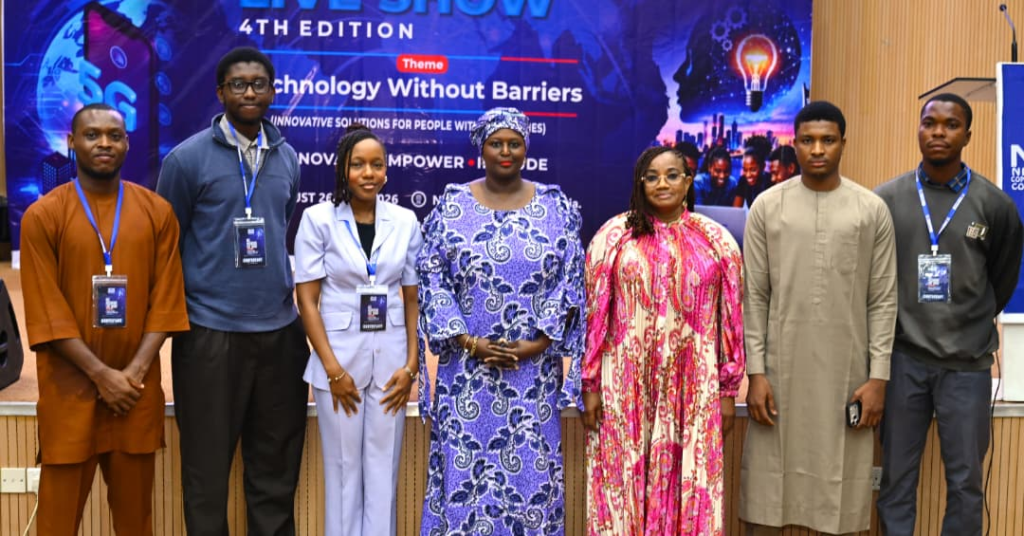
The Nigerian Communications Commission (NCC) has awarded a combined ₦6 million to three Nigerian startups developing technology solutions aimed at improving digital inclusion for persons with disabilities.
The awards were presented during the fourth edition of the NCC Hackathon Live Show in Abuja, held under the theme “Technology Without Barriers: Innovative Solutions for Persons with Disabilities.”
The initiative brought together innovators working on technology designed to address practical barriers affecting persons with disabilities, from employment and communication to access to electricity information and digital productivity.
For Nigeria’s disability community, the significance of the competition goes beyond the prize money.
It highlights a growing recognition that assistive technology and accessible digital services are increasingly essential to participation in education, employment, healthcare, financial services and public life.
Three Startups Receive the ₦6 Million Prize
At the conclusion of the competition, three startups emerged as winners.
SORA took first place and received ₦3 million.
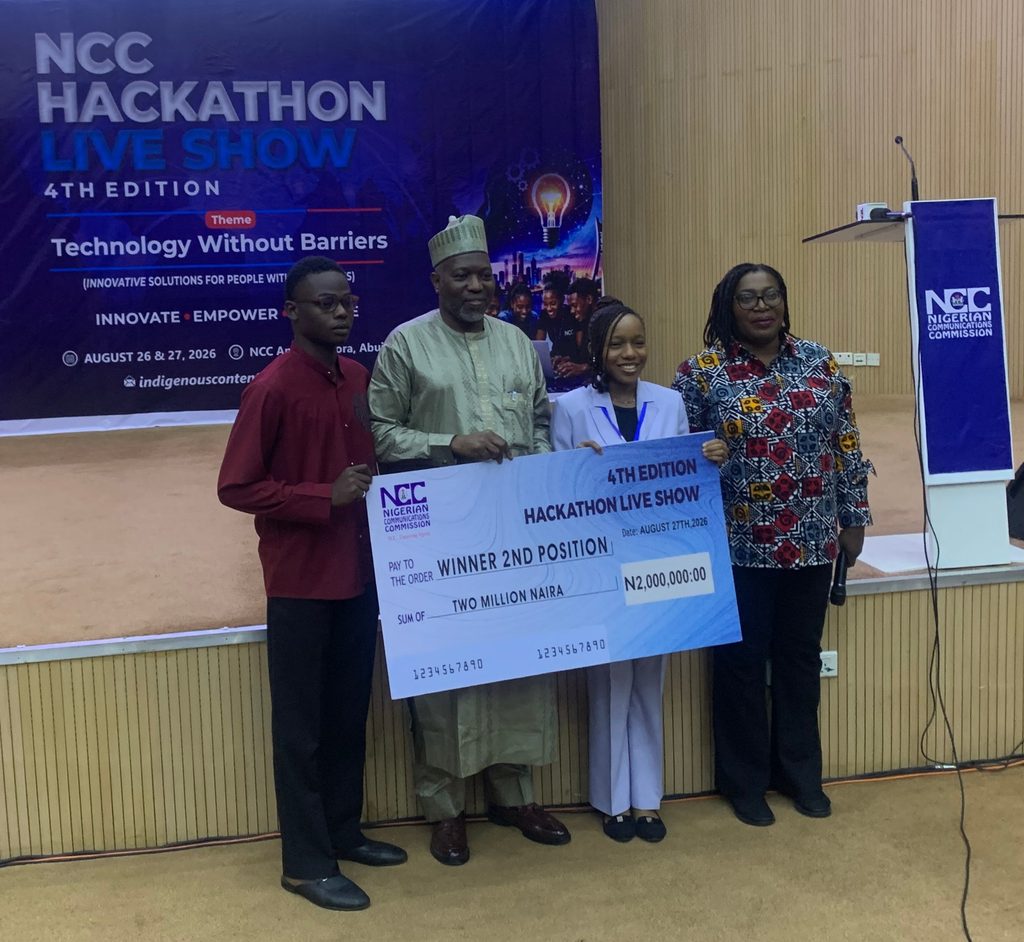
Clear Signal placed second and received ₦2 million.
Ikor finished third and received ₦1 million.
The three solutions approach disability inclusion from different angles, demonstrating how technology can address very specific barriers.
SORA Targets Employment and Skills Development
SORA, developed by Abdulhaqq Motolani Somoye, won the top prize with an inclusive job-matching and adaptive-skills platform designed for verified persons with disabilities.
The platform seeks to connect qualified persons with disabilities to employers and government institutions that support inclusive recruitment.
It also provides learning opportunities adapted to different disability needs.
The focus on employment is particularly important.
Persons with disabilities often encounter barriers long before they reach the workplace. Recruitment websites may not be accessible, application processes may be difficult to navigate, and employers may lack the systems needed to recruit and retain disabled employees.
A platform designed around accessibility could help address some of these gaps.
Clear Signal Tackles Accessible Electricity Information
Clear Signal, developed by Stephanie Nwangwu, received the second-place prize.
Its platform is designed to provide accessible electricity outage notifications to blind, visually impaired, deaf and hard-of-hearing electricity users.
The system uses channels including voice calls, text messages and visual alerts to make outage information more accessible.
At first glance, electricity notifications may appear unrelated to disability inclusion.
They are not.
Reliable access to information is an essential component of independent living. For someone using electrically powered assistive equipment or technology, knowing about an outage can also be important for planning and safety.
Ikor Uses AI to Support Digital Productivity
Third-place winner Ikor, developed by Victor Akpan, received ₦1 million.
The startup developed an AI-powered voice dictation and writing assistant intended to help people overcome barriers associated with physical typing, expensive hardware and limited internet access.
Voice-based computing has significant potential for users who cannot comfortably operate conventional keyboards.
As work, education and business increasingly move online, accessible digital productivity tools could help more Nigerians participate in the digital economy.
NCC Says Technology Must Not Leave People Behind
NCC Executive Vice Chairman Dr Aminu Maida said Nigeria’s digital transformation cannot be considered successful if significant sections of the population remain excluded.
The Commission said the hackathon was designed to encourage indigenous innovation and develop practical technologies capable of addressing barriers faced by persons with disabilities and other underserved communities.
The competition also reflects a broader shift in how disability technology is being approached.
Rather than relying entirely on imported assistive products, Nigerian innovators can develop solutions that respond directly to local conditions, languages, infrastructure and economic realities.
The Competition Looked Beyond a Single Technology
The hackathon attracted 20 contestants, with five finalists advancing to the final stage.
Areas explored included:
- AI-powered speech-to-text systems
- Real-time sign-language translation
- Voice-based complaint systems
- Accessible customer-care services
- USSD accessibility
- Image-to-voice navigation
- Inclusive employment platforms
These areas reflect the breadth of the digital barriers experienced by persons with disabilities.
Accessibility is not one problem with one solution.
A blind person may need a different technology from a Deaf person. A wheelchair user may face different barriers from someone with a cognitive disability.
That is why a diverse assistive technology ecosystem matters.
The Bigger Challenge Is Scaling
Winning a hackathon is only the beginning.
The startups now face the harder challenge of transforming promising ideas into sustainable products.
That means securing additional investment, conducting extensive user testing, strengthening cybersecurity, developing business models and ensuring that the products remain affordable.
The disability community must also be involved throughout the process.
Technology designed without users can easily solve the wrong problem.
Partnerships Could Determine the Next Stage
The NCC indicated that discussions could continue with institutions including the Central Bank of Nigeria, the Federal Ministry responsible for innovation and MTN Nigeria to explore ways of supporting participating innovators.
Such partnerships could help the startups move from competition prototypes to products capable of reaching thousands or millions of users.
For assistive technology, that transition is critical.
A brilliant prototype that never reaches users changes little.
Why This Matters to Nigeria’s Digital Economy
Digital inclusion is increasingly connected to economic inclusion.
Job applications, banking, education, government services, entrepreneurship and communication are all becoming more digital.
If those systems are inaccessible, persons with disabilities can be excluded from economic opportunities even when the underlying service is technically available.
Supporting accessible technology therefore has implications far beyond the disability sector.
It is part of building a digital economy that works for the entire population.
Conclusion
The NCC’s ₦6 million investment in three disability-focused startups sends an important signal: accessibility is increasingly being recognised as an innovation opportunity rather than simply a regulatory requirement.
SORA, Clear Signal and Ikor have each demonstrated different ways technology can remove barriers for persons with disabilities.
The next test will be whether these solutions can attract the investment, partnerships and user support required to scale.
If they do, the NCC Hackathon could prove to be more than a competition.
It could become a launchpad for a new generation of Nigerian assistive technology companies and a more accessible digital economy.