
WEP Seeks Nasarawa Disability Commission Partnership to Implement THRIVE Project
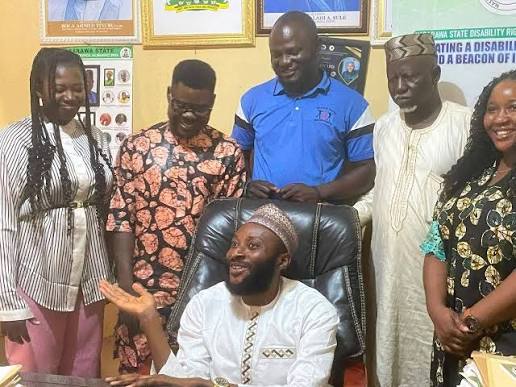
The Women Environmental Programme (WEP) is seeking strategic partnerships with government institutions and community stakeholders in Nasarawa State as it begins implementing the Transforming Her Resilience, Inclusion and Value in Economies (THRIVE) Project.
The initiative is designed to strengthen resilience, inclusion and economic empowerment for women, including women with disabilities, and WEP has been engaging relevant government ministries, departments, agencies and community leaders to establish partnerships for implementation.
The development is significant because women with disabilities often face multiple barriers to economic participation, including discrimination, limited access to finance, inaccessible training and restricted opportunities to participate in decision-making.
What Is the THRIVE Project?
THRIVE stands for Transforming Her Resilience, Inclusion and Value in Economies.
The project is being implemented by WEP with funding support from Christian Aid.
According to WEP, the initiative is intended to strengthen resilience, inclusion and economic empowerment among women and women with disabilities.
Rather than approaching women’s economic empowerment solely through training or financial support, the project places emphasis on building partnerships and creating conditions in which women can participate more effectively in local economies.
Why Nasarawa Matters
Nasarawa State presents an important environment for programmes focused on women’s economic participation.
Women in communities across the state contribute to agriculture, trade, small businesses and household economies, yet many continue to face structural barriers to economic growth.
For women with disabilities, those barriers can be even more pronounced.
A woman may have the skills to operate a business but lack access to credit.
Another may have a viable business idea but be unable to attend training because the venue is inaccessible.
Others may face social attitudes that limit their participation in community decision-making.
These are precisely the kinds of barriers that disability-inclusive economic programmes need to consider.
WEP Begins Stakeholder Engagement
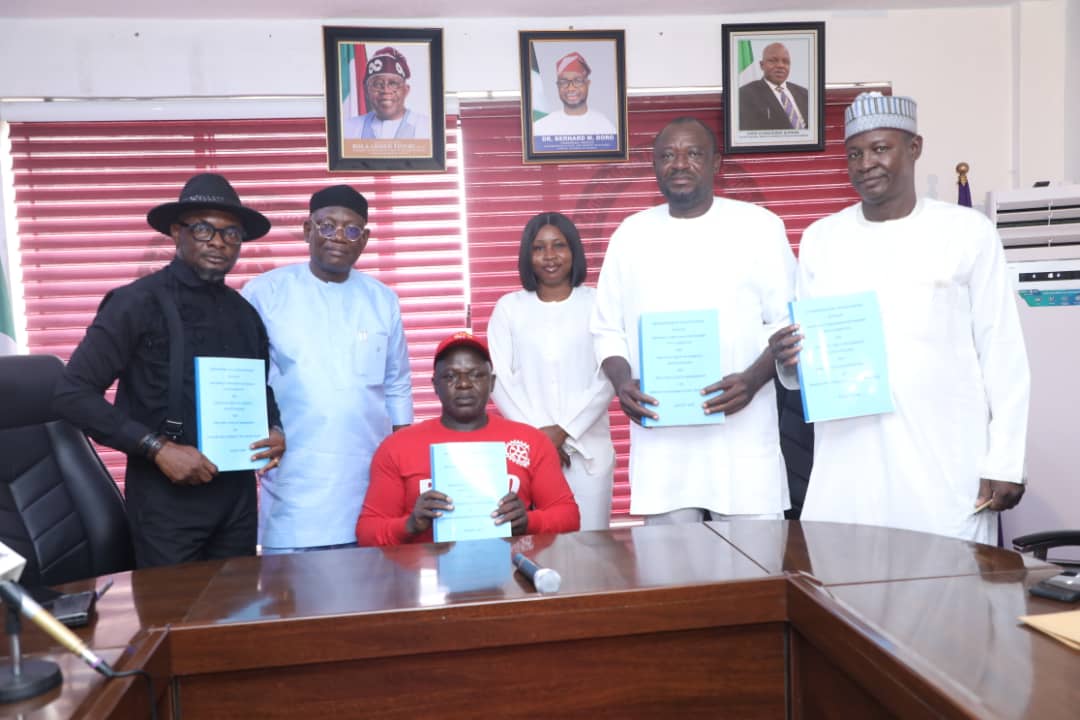
WEP has been conducting courtesy visits to government ministries, departments and agencies as well as community leaders in Nasarawa State as part of the launch of the THRIVE Project.
The organisation said the visits were intended to introduce the project, build strategic partnerships and secure institutional and community support for implementation.
That approach could be particularly important for disability inclusion.
Government agencies control or influence many of the systems that determine whether women with disabilities can access services, economic programmes and opportunities.
Why Disability Inclusion Must Be Central
Women with disabilities should not be treated as an afterthought within women’s empowerment programmes.
They should be part of the design.
This means considering accessibility at every stage, including:
- Community consultations
- Training venues
- Communication
- Financial services
- Digital platforms
- Entrepreneurship support
- Monitoring and evaluation
For example, training delivered through digital platforms should consider screen-reader compatibility, captioning and other accessibility needs.
Physical meetings should consider mobility access.
Communication should account for different disabilities.
Building Partnerships Instead of Parallel Systems
One of the strongest aspects of the THRIVE approach is the emphasis on partnerships.
WEP’s stakeholder engagement is intended to create collaboration with government and community institutions rather than establish a completely separate system.
Partnerships can help programmes reach beneficiaries more effectively.
They can also increase the likelihood that successful interventions continue after project funding ends.
Economic Empowerment Is More Than Start-Up Money
Economic inclusion is often reduced to providing small grants or equipment.
While financial support can be valuable, sustainable empowerment requires more.
Women entrepreneurs also need:
- Skills
- Markets
- Business networks
- Access to information
- Financial literacy
- Mentorship
- Accessible infrastructure
- Opportunities to participate in larger value chains
For women with disabilities, removing accessibility barriers is equally important.
The Importance of Women With Disabilities in Programme Design
The success of THRIVE will depend partly on whether women with disabilities have a meaningful voice in implementation.
Organisations representing persons with disabilities can help identify barriers that may not be visible to programme designers.
A project may appear accessible on paper while remaining difficult to use in practice.
That is why consultation should continue beyond the launch stage.
Women with disabilities should participate in monitoring the project’s progress and identifying areas requiring adjustment.
Climate and Economic Resilience
WEP’s broader work includes climate change and climate justice, while the THRIVE initiative places emphasis on resilience and economic empowerment.
This connection matters because climate shocks can disproportionately affect people whose livelihoods already depend on fragile economic systems.
Women working in agriculture, informal trade and small-scale enterprises may face disruptions from flooding, drought, extreme weather and changing economic conditions.
Women with disabilities can face additional barriers when recovering from such shocks.
What Success Could Look Like
If effectively implemented, THRIVE could contribute to:
- Increased economic participation
- Improved access to opportunities
- Stronger women’s networks
- Greater inclusion of women with disabilities
- More resilient livelihoods
- Stronger cooperation between government and civil society
But these outcomes should be measured rather than assumed.
Clear indicators will be necessary to determine whether beneficiaries are actually gaining sustainable economic opportunities.
Conclusion
WEP’s effort to build partnerships in Nasarawa State as part of the THRIVE Project represents an important step towards more inclusive economic development.
For women with disabilities, the project’s greatest opportunity lies in ensuring that inclusion is built into implementation from the beginning.
The partnership between civil society, government institutions, communities and disability organisations will ultimately determine how far the programme can go.
If THRIVE succeeds in combining resilience, accessibility and economic opportunity, it could offer useful lessons for disability-inclusive development programmes beyond Nasarawa State.