


Kenya Public Service Commission Signs Landmark 5-Year Disability Inclusion Agreement
Overview
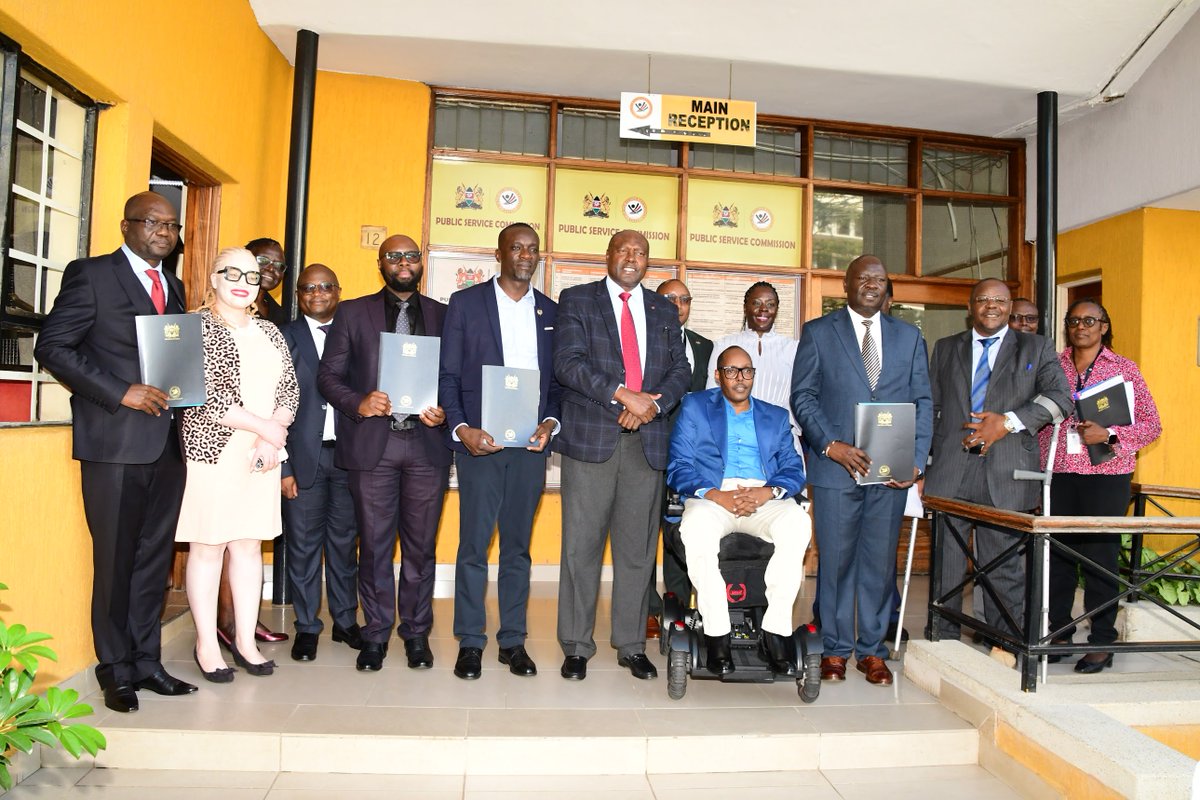
In a development that marks one of the most concrete institutional commitments to disability inclusion in Kenya’s public sector in recent years, the Kenya Public Service Commission (PSC) signed a binding Memorandum of Understanding (MoU) on May 23, 2026, alongside three partner organizations: the National Council for Persons with Disabilities (NCPWD), CBM Kenya, and Light for the World Kenya. The five-year agreement is designed to move beyond policy declarations and into enforceable accountability, establishing clear obligations for how Kenya’s government ministries and state agencies hire, accommodate, and retain persons with disabilities.
For civil society organizations, development practitioners, and disability rights advocates working across Eastern Africa, this agreement carries significant weight. It signals that Kenya is prepared to treat its statutory disability employment obligations not as aspirational language buried in legislation, but as operational mandates that can be monitored, measured, and enforced through institutional partnerships.
The Legal Foundation: Kenya’s Persons with Disabilities Act
The MoU is anchored in Kenya’s Persons with Disabilities Act, which establishes a statutory minimum of five percent representation of persons with disabilities across all public service sectors and state ministries. This legal threshold is not new, but its consistent application has historically been uneven. Many government agencies have either lacked the internal mechanisms to implement the requirement or have deprioritized it amid competing administrative pressures.
What the newly signed MoU introduces is a formalized framework for accountability. By binding the PSC to specific partner organizations that specialize in disability inclusion, the agreement creates a structure through which compliance can be tracked and gaps can be addressed systematically rather than on an ad hoc basis.
The five percent threshold applies broadly. It is not limited to entry-level positions or specific departments but spans the full breadth of public service employment, including administrative roles, technical positions, and leadership functions within state ministries. This scope is important because disability inclusion policies that concentrate persons with disabilities in particular job categories or lower-grade positions risk creating a form of tokenism rather than genuine integration.
The Partner Organizations and Their Roles
Understanding the significance of this MoU requires looking at who the PSC has chosen to partner with and what each organization brings to the table.
National Council for Persons with Disabilities (NCPWD)
The NCPWD is Kenya’s principal statutory body responsible for matters concerning persons with disabilities. It sits at the intersection of regulatory oversight and service provision. Its involvement in this MoU is significant because it connects the PSC’s internal HR processes directly to the national disability registry and to established certification and verification frameworks. The NCPWD’s participation means that the partnership is not simply advisory but is linked to the legal and administrative machinery of disability governance in Kenya.
CBM Kenya
CBM is an international Christian development organization with a long operational history across low- and middle-income countries. In Kenya, CBM has built programming around inclusive development, accessible health services, and disability-mainstreamed community work. Its inclusion in this partnership suggests that the MoU will benefit from technical expertise in translating global inclusive development standards into locally applicable practices, particularly in areas like workplace accessibility assessments and reasonable accommodation frameworks.
Light for the World Kenya
Light for the World is a disability-focused development organization with particular expertise in inclusive education and accessible eye health. Its presence in a public service employment partnership may initially seem tangential, but the organization brings deep experience in disability inclusion systems-building, especially in contexts where infrastructure and attitudes have historically been exclusionary. Their contributions to this MoU are likely to include capacity-building support and inclusive design guidance for government institutions.
What the MoU Commits the PSC To
While full implementation guidelines will emerge through the operational rollout of the MoU, the agreement broadly mandates that the PSC enforce the five percent disability representation requirement across public service recruitment and retention. This encompasses several dimensions of institutional change.
First, it requires that recruitment processes within Kenya’s public service be actively made accessible, which includes accessible job advertisements, accommodated application processes, and non-discriminatory shortlisting criteria. Second, it introduces the expectation that state ministries will be held accountable for their individual disability inclusion figures, with the PSC functioning as the enforcement mechanism. Third, by partnering with specialist organizations, the MoU acknowledges that public sector institutions need technical support to achieve genuine inclusion rather than numerical compliance alone.
For organizations working in disability rights and inclusive employment, this distinction matters enormously. Numerical compliance, where an institution hires to a quota without addressing workplace barriers or support structures, often leads to poor retention and reinforces the misconception that persons with disabilities are underperforming employees. Genuine inclusion requires accessible physical environments, supportive management practices, tailored onboarding, and a workplace culture that values diverse abilities. The involvement of CBM Kenya and Light for the World suggests that the MoU intends to address the qualitative dimensions of inclusion alongside the quantitative targets.
Implications for Civil Society and Development Organizations
For NGOs, disability rights organizations, and development agencies operating in Kenya and the broader East African region, this MoU creates both opportunities and responsibilities.
On the opportunity side, the agreement legitimizes disability-inclusive employment as a public policy priority with measurable outcomes. Civil society organizations that have been advocating for stronger enforcement of Kenya’s disability employment legislation now have a concrete institutional mechanism to reference and engage with. Advocacy efforts can shift from pushing for policy recognition to demanding accountability under an already agreed framework.
There is also the question of alignment. Organizations implementing disability-inclusive programming in Kenya, whether in education, livelihoods, health, or community development, can now connect their work more explicitly to the public sector employment pipeline. Skills training programs, for example, can orient their outcomes toward the specific competencies that public service roles require, while vocational rehabilitation programs can engage directly with NCPWD’s placement linkages.
On the responsibility side, civil society will need to play a watchdog role. A five-year MoU is a long-term commitment, and experience with similar agreements across the region suggests that the quality of implementation often fades after the initial announcement period. Sustained monitoring, public reporting, and civil society pressure will be necessary to ensure that the PSC and its partner ministries continue to meet their obligations in years two, three, and beyond.
Broader Context: Disability Inclusion in East African Public Services
Kenya’s MoU does not exist in isolation. Across East Africa, governments have made varying degrees of commitment to disability-inclusive public employment, but enforcement has remained the persistent weak link. Uganda has constitutional provisions protecting the rights of persons with disabilities and reserved parliamentary seats for disability representatives, but disability mainstreaming within the public service has been gradual. Tanzania’s disability legislation includes employment provisions, but implementation has faced resource and capacity constraints.
Kenya’s decision to formalize its commitments through a multi-stakeholder MoU with specialist partner organizations represents a structural approach that other governments in the region may look to as a model. The binding nature of the agreement, combined with the technical expertise of CBM Kenya and Light for the World, creates conditions for a more sustainable implementation pathway than either legislation or policy declarations alone can provide.
What to Watch Going Forward
The true measure of this MoU will be visible not in its signing but in what follows over the next five years. Key indicators to monitor include the publication of annual disability representation data across state ministries, changes in the PSC’s recruitment guidelines and their accessibility provisions, documented cases of accountability where ministries falling below the five percent threshold are formally required to present corrective plans, and the nature of technical support that CBM Kenya and Light for the World actually deliver to government institutions.
For organizations that work on disability rights, inclusive employment, or public sector reform in Kenya, this MoU is a development worth engaging with closely and tracking with rigor.