


South Africa’s 2026 Disability Rights Policy Workshop: Why the Country Urgently Needs a National Disability Act

Introduction
South Africa has a strong constitutional framework for disability rights. It has ratified the UN Convention on the Rights of Persons with Disabilities (CRPD). It has the White Paper on the Rights of Persons with Disabilities. But one critical thing is missing: a National Disability Act with real legal teeth.
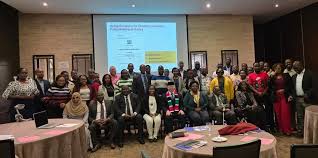
That was the defining message to emerge from a landmark two-day workshop convened by the Gauteng Provincial Government in Sandton, South Africa, on 12–13 February 2026. Bringing together disability sector leaders, government officials, and international partners from Japan, Thailand, and South Korea, the workshop delivered a frank assessment of where South Africa stands on disability rights and what must urgently change.
What Was the Workshop?
The 2026 Disability Rights Policy Workshop was hosted at the Sky Hotel in Sandton, Gauteng. It was a rare formal gathering that brought together the public sector, the disability community, civil society organisations, and international advisors under one roof to assess the state of disability rights implementation and plan the path forward.
The international dimension was significant: experts from Japan, Thailand, and South Korea countries that have developed their own national disability legislation shared insights and models that could inform South Africa’s approach. These countries offer concrete examples of what a well-resourced, legally enforceable disability framework looks like in practice.
The Core Problem: A Framework Without Legal Force
South Africa’s White Paper on the Rights of Persons with Disabilities offers a comprehensive vision for an inclusive society. It covers health, education, employment, social protection, transport, and independent living. It is well-regarded within the disability sector as a thoughtful and ambitious policy framework.
But there is a fundamental problem: it is not law.
Without legal enforceability, there are no meaningful consequences when government departments, municipalities, private companies, or public institutions fail to implement the White Paper’s provisions. Disability-inclusive procurement targets go unmet. Accessible infrastructure is never built. Employment equity requirements for persons with disabilities remain largely unimplemented. And no one is held accountable.
Workshop participants were direct about this reality. As one key discussion outcome noted: ‘Both the public and private sector fails to comply. There was a call for a national Disability Act that would ensure the rights of persons with disabilities were enforceable with real consequences.’
The International Evidence: Disability Acts Work
The inclusion of international partners from Japan, Thailand, and South Korea was deliberate. All three countries have enacted national disability legislation laws that go beyond policy frameworks to create binding legal obligations with enforcement mechanisms.
Japan’s Act for Eliminating Discrimination against Persons with Disabilities (2016) creates both anti-discrimination obligations and reasonable accommodation requirements for public and private entities. South Korea’s Act on Welfare of Persons with Disabilities includes detailed implementation plans, dedicated funding streams, and monitoring bodies with authority to investigate complaints. These models demonstrate that legal frameworks lead to measurably better outcomes for persons with disabilities when properly resourced and enforced.
The Case for South Africa’s National Disability Act
A National Disability Act for South Africa would:
- Give legal force to the rights and entitlements currently only stated in the White Paper
- Create binding obligations for government departments, state-owned entities, and private sector employers
- Establish clear complaint and enforcement mechanisms for persons with disabilities whose rights are violated
- Mandate accessible infrastructure in public buildings, transport, and digital services
- Require reasonable accommodation in workplaces and educational institutions
- Protect persons with disabilities from discrimination in all areas of public life
- Establish monitoring and accountability bodies with genuine investigative and sanctioning power
Most importantly, it would move disability rights from the realm of aspiration into the realm of law — where violations carry real consequences for those who fail to comply.
What Was Agreed at the Workshop
While the workshop did not produce binding policy commitments, it generated significant consensus on the direction of travel. Participants agreed that:
- The current White Paper framework, though comprehensive, is insufficient without legal backing
- Independent living, the right of persons with disabilities to choose where and how they live, must be a central pillar of any national disability law
- International models, particularly from Asia, offer practical lessons for South Africa
- Ubuntu, the African philosophy of shared humanity and mutual responsibility, should be the cultural backbone of South Africa’s disability rights framework, not just a rhetorical flourish
Ubuntu and the Path Forward
The workshop’s closing framing was notably grounded in an African philosophical context. Rather than simply importing international models wholesale, participants argued that South Africa’s Disability Act must be rooted in Ubuntu, the principle that our humanity is bound up in the humanity of others.
In practical terms, this means designing a disability law that is community-centred: one that strengthens community-based support, values the expertise of persons with disabilities themselves in design and oversight, and recognises that independent living is not about isolation but about the right to participate fully in the life of one’s community with appropriate support.
What Needs to Happen Next
Awareness and advocacy workshops are a starting point, not a destination. For a National Disability Act to become reality in South Africa, the following steps are critical:
- Parliamentary commitment to introduce disability rights legislation in the 2026/27 legislative cycle
- A formal consultation process led by and with persons with disabilities and their organisations
- Cross-departmental coordination between Women, Youth and Persons with Disabilities, Justice, Social Development, and others
- Dedicated government budget allocation for a law reform process
- Engagement with the South African Law Reform Commission
Conclusion
South Africa has the infrastructure of goodwill on disability rights. What it lacks is the infrastructure of law. The 2026 Disability Rights Policy Workshop was a clear signal from the disability sector, government, and international partners: the time for a National Disability Act is now. Not next decade. Now. From policy promises to lived rights, that journey begins with legislation.