
Why Children with Disabilities in Africa Are Still Being Left Out of School And What Is Changing
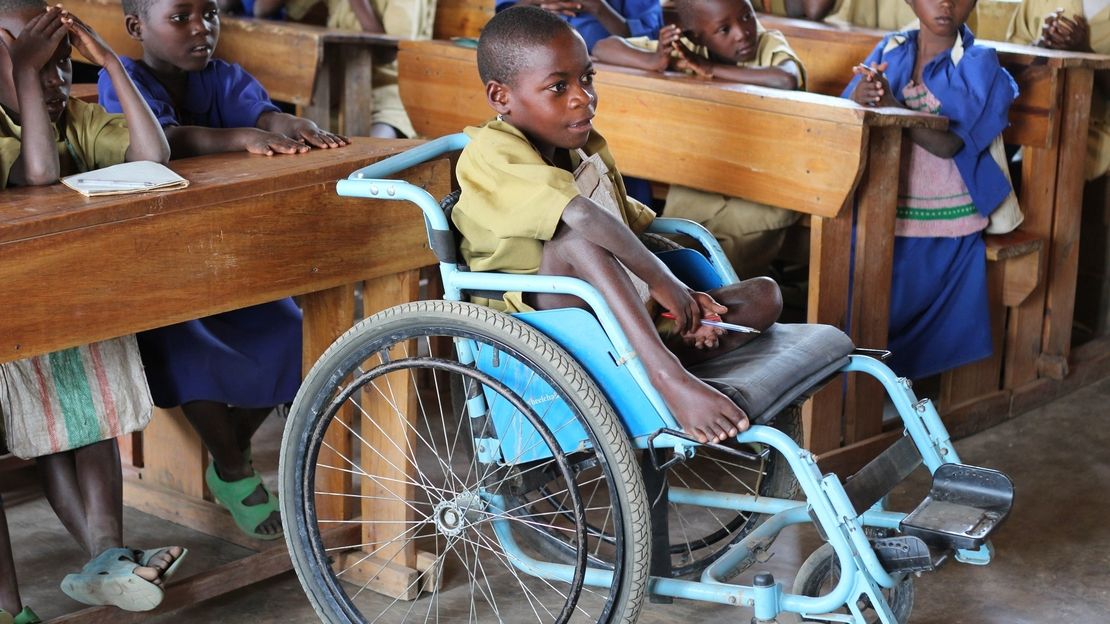
Imagine a child who wants to learn. They live within walking distance of a school. Their family values education. But when they arrive at the gate, the school has no ramp for their wheelchair. The teacher has never been trained in inclusive instruction. There are no learning materials in Braille. The other children stare. The family is told, gently or not so gently, that this child would be better served at a special school in a city three hundred kilometres away.
This is not a hypothetical scenario. It is the daily reality for millions of children with disabilities across Africa. Despite major progress in expanding school enrolment over the past two decades, disability remains one of the most persistent barriers to education on the continent.
The Scale of the Crisis
With fewer than 10 percent of children with disabilities in Africa attending school, the education gap is staggering. In Sub-Saharan Africa specifically, World Bank research published in recent years shows that disability gaps in educational attainment are not shrinking in many countries, they are widening. This is happening even as overall school enrolment rates improve.
In Africa, an estimated 6.4 percent of children under 14 have moderate to severe disabilities. Given the continent’s young population, this translates to tens of millions of children. The true prevalence is likely even higher because data collection in many conflict-affected settings is poor, and disability is significantly under-reported due to stigma.
Children with disabilities who do manage to access school face a second set of barriers once inside: inaccessible classrooms, rigid curricula, examinations that do not allow accommodations, teachers who lack training, and peer cultures shaped by social stigma. Even when they enroll, they are more likely to drop out than their non-disabled peers.
What Causes This Exclusion?
The barriers to disability-inclusive education in Africa can be grouped into supply-side and demand-side barriers.
Supply-side barriers include the physical inaccessibility of school buildings, classrooms, and toilets; the absence of accessible transport; inaccessible learning materials and inflexible curricula; an almost universal absence of assistive technology in classrooms; and teachers who have received little or no pre-service or in-service training in inclusive education.
Demand-side barriers include deep social stigma around disability; parental and family misconceptions about a disabled child’s ability to learn; financial pressures that lead families to prioritise the education of non-disabled children when resources are limited; and the absence of welfare provisions that could offset the additional costs of accessing school for a child with a disability.
The World Bank and USAID Response
In 2017, the World Bank and USAID established the Disability-Inclusive Education in Africa Program, a USD 3 million trust fund specifically designed to increase access for children with disabilities to primary school and to build the evidence base for effective inclusive education policy. The program has provided nearly USD 1.5 million in grants across seven countries: Ethiopia, Ghana, Lesotho, Liberia, Senegal, The Gambia, and Zambia, to pilot interventions, generate data, and build policy capacity.
The program operates across three pillars. The first pillar builds the evidence base by commissioning research on the economic and social barriers to inclusive education. The second pillar funds demonstrative activities — small grants to World Bank teams to test what works on the ground. The third pillar disseminates knowledge through policy briefs, webinars, and educational videos to help governments translate evidence into policy.
The World Bank also committed, as part of its Ten Commitments on Disability-Inclusive Development, to ensure that all World Bank-financed education programs and projects are disability-inclusive by 2025. This commitment has been monitored through a disability tagging system for all education operations.
The Inclusive Education Policy Learning Exchange
One of the most promising initiatives coming out of this work is the World Bank’s Inclusive Education Policy Learning Exchange, a multi-sectoral capacity-building programme that draws on expertise from education, social care and protection, and health. To date, country teams from Rwanda, Ethiopia, The Gambia, Zambia, and Malawi have participated in the learning exchange, with almost 200 participants including representatives from Ministries of Education and Health.
The Scottish Government joined the Foundational Learning Compact Trust Fund in January 2024 to support inclusive education work, with a particular focus on its three African partner countries – Malawi, Rwanda, and Zambia — and a heavy focus on learners with disabilities. This partnership includes new scholarships to support women and girls in education, and the learning exchange is establishing regional communities of practice for ongoing peer support among African education professionals.
The Role of Teachers
The World Bank’s own research is unambiguous: teachers are simply not equipped to promote inclusive education in most African countries. International evidence strongly suggests that inclusive education benefits all students not only those with disabilities because it promotes collaborative learning, empathy, and diverse problem-solving. But realising these benefits depends on teachers who are trained to identify and respond to diverse learning needs.
Currently, most African universities and teacher training colleges do not include meaningful content on disability inclusion, assistive technology, or differentiated instruction in their undergraduate programmes. This is a structural failure that no amount of programming can overcome without curriculum reform at the source.
📌 If you are a teacher, school leader, or education official in Africa, you can access free resources on disability-inclusive education through the World Bank’s Inclusive Education Initiative at worldbank.org/inclusive-education-initiative.
What Genuine Inclusion Looks Like
Genuine inclusive education is not simply placing a child with a disability in a mainstream classroom and calling it done. It requires accessible physical infrastructure, flexible teaching methods, learning materials in accessible formats, assistive technology, trained teachers and teaching assistants, family engagement, and peer culture that values diversity.
The Universal Design for Learning (UDL) framework, which the World Bank has endorsed for its African operations, provides a practical approach: design education systems for the widest range of learners from the start, rather than retrofitting inclusion as an afterthought. This means adjustable lighting, Braille and audio materials, sign language resources, online assessment options, and extra time for students who need it.
Every child deserves to learn. The evidence, the frameworks, and increasingly the funding are in place. What Africa needs now is political will, teacher training at scale, and communities that demand inclusion not as charity, but as a right.