
Disability Rights Fund Opens 2026 Grant Round for Africa: Everything You Need to Know
For organisations of persons with disabilities (OPDs) across Sub-Saharan Africa, access to dedicated funding is one of the most persistent challenges in advancing disability rights. Many OPDs operate on shoestring budgets, relying on volunteer energy and community goodwill to sustain campaigns that protect the rights of millions. That is why the upcoming 2026 grant round from the Disability Rights Fund (DRF) is one of the most significant opportunities of the year and every eligible organisation should understand exactly what is available, who qualifies, and how to apply.
This post provides a comprehensive overview of the Disability Rights Fund, its 2026 grantmaking round, the types of organisations that are funded, and practical guidance for organisations across Africa preparing their applications.
What Is the Disability Rights Fund?
The Disability Rights Fund, founded in 2008, is a pooled grant-making fund that exclusively supports organisations led by persons with disabilities. Its sister organisation, the Disability Rights Advocacy Fund (DRAF), handles advocacy specifically related to legislative lobbying. Together, DRF and DRAF have distributed grants to hundreds of OPDs across Sub-Saharan Africa, South and South-East Asia, Haiti, and Pacific Island Countries.
What makes DRF unique is its governance structure. Persons with disabilities are not just beneficiaries they are decision-makers. The Grantmaking Committee that approves funding includes disability activists such as Ishumael Zhou, President of the African Union of the Blind, who lost his sight at the age of seven. This ‘nothing about us without us’ principle runs through every aspect of DRF’s operations.
Since 2008, DRF and DRAF have tracked all grants publicly in an open directory, covering every grant made from 2008 through 2024. This transparency reflects a deep commitment to accountability toward the disability movement.
What the 2026 Grant Round Looks Like
The 2025 round, which closed earlier than expected due to an overwhelming volume of applications, set important precedents that will carry into 2026. For the first time, the 2025 round opened to all countries across Sub-Saharan Africa, not just DRF’s previous focus countries. This expansion is expected to continue in 2026.
Based on DRF’s established grantmaking structure, the 2026 round is expected to offer three funding streams:
- Small Grants — up to USD 60,000 for two years, for smaller OPDs at local or sub-national level
- Mid-Level Coalition Grants — USD 30,000 to 50,000 per year, for coalitions of three or more organisations
- National Coalition Grants — USD 40,000 to 60,000 per year (up to USD 120,000 for two years), for national coalitions
Applications for both DRF and DRAF grants are submitted through a Letter of Interest (LOI) process. LOI forms are available in English, French, Portuguese, and Indonesian, making the process accessible to Francophone African organisations.
Who Is Eligible to Apply?
DRF is highly specific about eligibility. To qualify, your organisation must meet all of the following criteria:
- Be headquartered and primarily operating in one of DRF’s target countries in Sub-Saharan Africa
- Be a registered non-governmental organisation of persons with disabilities or a group of persons with disabilities operating under a fiscal sponsor that is a registered OPD
- Have a project proposal that specifically references and supports the UN Convention on the Rights of Persons with Disabilities (CRPD)
DRF does not fund individuals, capital projects to make buildings accessible, service provision or income generation projects, or legislative lobbying (that falls under DRAF). Organisations applying to lead coalition grants must themselves be OPDs, though partners can include civil society organisations that work on human rights.
2026 Grant Round
Next open call for Letters of Interest from Organizations of Persons with Disabilities (OPDs) in sub-Saharan Africa will open at the end of May 2026. The deadlines for our annual grantmaking round are as follows:
- Our portal will open for submissions of Letters of Interest (LOIs): Saturday, 30 May 2026
- Deadline for Submitting Letters of Interest: Sunday, 21 June 2026 at 23:59 ET (Eastern Daylight Savings Time)
- Invitations for successful Letters of Interest: Tuesday, 28 July 2026
- Deadline for submitting full applications (invited organizations only): Sunday, 23 August 2026
- Final grantmaking decisions made: December 2026
- Successful projects start: 1 January 2027
Multi-Year Funding: A Game Changer for African OPDs
Starting from the 2023 cycle, DRF introduced multi-year funding for eligible returning grantees. This is a significant development. Many OPDs in Africa struggle with the administrative burden of annual funding cycles writing proposals, submitting reports, and managing grant periods drains time and capacity from actual advocacy work.
With multi-year approval, an eligible organisation that has demonstrated strong implementation can apply for two years of funding in a single proposal process. This allows OPDs to plan longer-term campaigns, hire staff with greater job security, and build institutional capacity rather than lurching from one grant period to the next.
South Africa’s 2026 Disability Grant Update
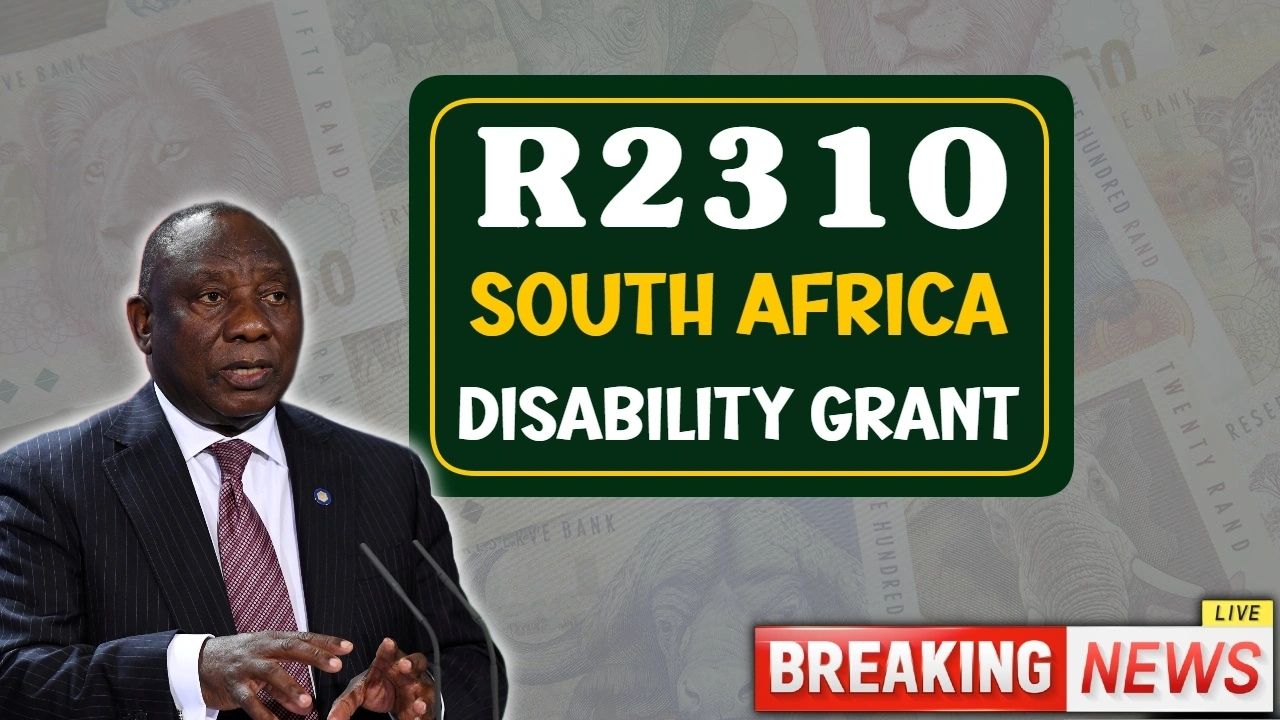
While the DRF focuses on civil society, it is worth noting that at the government level, South Africa’s disability support framework also received an update in the 2026 Budget Review. The national disability grant increased from R2,315 to R2,400 per month, a modest but meaningful improvement for the hundreds of thousands of South Africans who depend on it. The South African Social Security Agency (SASSA) administers both temporary grants (for disabilities lasting six to twelve months) and permanent grants, and the 2026 budget also allocated additional funding for improved verification systems.
How to Prepare Your 2026 LOI
Given the overwhelming response DRF received in 2025 — which forced them to adjust deadlines — organisations interested in the 2026 round should begin preparation well in advance. Here are key steps:
- Review the CRPD articles most relevant to your work and explicitly reference them in your proposal
- Document your organisation’s disability-led governance — DRF prioritises OPDs where persons with disabilities hold leadership positions
- If planning advocacy connected to the Global Disability Summit commitments, make this explicit in your LOI
- Identify a fiscal sponsor if your organisation is not yet formally registered as an NGO
- Prepare financial statements and a short organisational background required documents for all applicants
📌 Watch the Disability Rights Fund website (disabilityrightsfund.org) closely for the 2026 round announcement. Subscribe to their newsletter to receive notifications directly.
Other Funding Sources for African Disability Organisations
While waiting for the DRF 2026 round, consider these additional funding opportunities that are open year-round or have rolling applications:
- Open Society Foundations Africa — supports disability rights within its broader human rights grantmaking
- Ford Foundation Africa — has funded disability inclusion work across multiple African countries
- CBM Global — particularly for organisations working on health, rehabilitation, and community-based disability programming
- African Development Bank — offers grants and development opportunities with disability inclusion components
Organisations can also explore the ReliefWeb funding alerts system and Devex Opportunities platform, both of which track disability-specific grant opportunities across the continent.
The Disability Rights Fund represents one of the most targeted, values-aligned funding sources available to African OPDs. As the 2026 round approaches, now is the time to strengthen your organisation’s documentation, build coalitions with peer OPDs, and align your advocacy agenda with the CRPD. The funding exists and it was built specifically for your work.
My name is Pharis Maina from Ability Therapy Place, in charge of Resource Mobilization.
Our CEO and Founder is called Dr. Duncan who is also the President of COTA (Kenya Occupational Therapists Association). We are writing to explore potential areas of partnership or collaboration arising from our flagship intervention, “The School Next Door Project.” The lived experiences emerging from this initiative present a compelling case for Corporate Social Responsibility (CSR) engagement in advancing disability inclusion in low-resource settings.
Kenya faces a profound disability inclusion gap. According to KISE (2018), approximately 11.4% of children, nearly 2.5 million have special needs, yet only 1,882 out of 93,988 schools nationwide have the capacity to support them. More than 70% of these children live in rural, low-income households, where poverty and disability reinforce each other. Through the School Next Door Project, ATP has directly reached 332 children across six counties, embedding Individualized Education Program (IEP) processes within schools and reducing overall care costs by nearly 30% by eliminating transport expenses and repeated facility visits.
However, systemic barriers persist. These include; unpaid caregiving burdens borne predominantly by women leading to stress and depression, menstrual hygiene and toileting challenges causing shame and school absenteeism, abandonment of children due to unaffordable caregiving demands, inadequate Monitoring and Evaluation systems to track developmental milestones, nonregistration with the National Council for Persons with Disabilities (NCPWD) due to transport constraints, shortages of skilled teachers and caregivers and limited vocational pathways for transition into employment. Poor nutrition among children abled differently further slows developmental progress, while expensive therapy services often lead to discontinuation of care. In addition, Kenya’s public transport system remains largely noninclusive, further entrenching discrimination and stigma.
In response, ATP has invested in CSR initiatives such as “Ability ya Kadogo,” supporting the most vulnerable families who cannot afford therapy, assistive devices, education, or hygiene support. We have also conducted continuous training for teachers and caregivers, strengthened safeguarding systems, advocated for increased county budget allocations for disability inclusion, and introduced resource planning models enabling families to pay for services in manageable increments. Despite these efforts, funding constraints significantly limit our ability to meet the magnitude of need.
We recognize and greatly appreciate that Disability Rights Fund, has demonstrated strong commitment toward advancing inclusion and improving livelihoods for persons with disabilities by addressing barriers such as discrimination and limited access to education and employment. These efforts strongly align with the work of Ability Therapy Place, which provides therapy, inclusive education support, pre-vocational and vocational training, and employment linkage within a 360-degree model that supports persons with disabilities from conception to old age with dignity.
It is in this spirit that we would welcome the opportunity to explore collaboration, partnership, and funding support to expand therapy interventions, strengthen IEP implementation in schools, and enable children in low resource settings to access education and rehabilitation services that are currently beyond their reach.
Additionally, Ability Therapy Place is celebrating “Ability at 10”, marking a decade of service in advancing disability inclusion. This milestone presents an excellent opportunity to position both Ability Therapy Place and Rights Disability Fund as strategic partners championing SDG 4 on inclusive and equitable quality education for children with disabilities. We would greatly welcome the opportunity to discuss how Rights Disability Fund might partner with us in this event as part of its CSR engagement while amplifying the shared commitment to inclusion and dignity for all.
We respectfully request a 25-minute opportunity to present our evidence, proposed areas of collaboration/partnership, and scaling. Should it be appropriate, I would be honored to present it in person.
Thank you for your time and consideration. I look forward to the possibility of collaboration in advancing inclusive, evidence driven systems so that truly no child is left behind.
Kind regards,
My name is Martin Kilavi, founder of Auschidys Disability Africa, an organization committed to advancing dignity, inclusion, and opportunity for children and youth with disabilities.
Before I became an advocate, I was first a father. A father trying to understand the journey of raising children who experience autism, dyslexia, and other developmental challenges. Like many parents in our communities, I experienced confusion, fear, and at times isolation. I witnessed how society often misunderstands disability, and how families are left to navigate this journey alone.
What struck me most was not the disability itself, but the barriers created by society. Stigma, lack of awareness, limited services, and systems that are not designed to include everyone continue to hold back many children and families.
Across many communities in Kenya, children with disabilities are still hidden at home. Not because they lack ability, but because opportunities have not been created for them.
It was from this experience that Auschidys Disability Africa was born.
Our mission is simple but powerful. We seek to change the narrative around disability and unlock the potential that exists in every child.
Over the years, Auschidys has worked directly with families, schools, and communities to promote disability awareness and social inclusion. Through community outreach campaigns we have reached thousands of people, helping communities understand that disability is not inability.
Through our life skills and empowerment programs, we support young people with disabilities to develop practical skills that build independence and confidence. Young people once dismissed by society are discovering their abilities through skills such as cooking, mechanics, soap making, gardening, arts and crafts, and other livelihood activities.
These experiences have shown us something very powerful. When society creates the right environment, people with disabilities thrive.
We have witnessed families move from despair to hope. We have seen young people gain confidence and begin to participate actively in their communities. We have seen lives transformed simply because someone believed in their potential.
Yet despite these successes, the need remains significant. Many families in low resource communities still struggle to access therapy services, assistive devices, inclusive education support, and vocational opportunities for their children.
This is why partnerships are so important.
At Auschidys Disability Africa we believe lasting change happens when communities, organizations, governments, and development partners work together to build inclusive systems.
When we invest in inclusion, we are not only supporting individuals with disabilities. We are strengthening families, building compassionate communities, and creating a society where everyone has the opportunity to contribute.
Every child deserves the opportunity to learn, grow, and participate in society with dignity.
Together we can ensure that no child is left behind.
Dear DRF,
I hope this message finds you well.
I am writing on behalf of Voice for Disabled People Association (VDPA) to kindly inquire whether there is an online template or application portal available for the March 2026 Call for Proposals. We would appreciate guidance on the appropriate format or link to complete the submission requirements.
VDPA is a refugee-led organization(OPD) working in Kakuma refugee camp and Kalobeyei settlement to promote disability inclusion, access to education, livelihoods, and protection for persons with disabilities. Through our community-based initiatives, we support children, youth, and adults with disabilities to access inclusive services and participate meaningfully in community development.
In addition to the inquiry regarding the proposal template, we would also welcome the opportunity to explore potential partnership or collaboration with your organization. We believe that strategic collaboration could strengthen inclusive programming and expand support for persons with disabilities within refugee and host communities.
Please let us know if there are specific guidelines, deadlines, or additional documents required for the proposal submission. We would also be pleased to share further information about VDPA’s programmes and areas of collaboration.
We look forward to your guidance and the possibility of working together.
Kind regards,