
Union Bank Nigeria Puts Women with Disabilities at the Centre of Its 2026 International Women’s Month Campaign
Corporate disability inclusion campaigns in Nigeria often exist at the level of statement. A press release, a social media post, a token appearance by a disability representative at an event primarily designed for other audiences. What Union Bank of Nigeria did during International Women’s Month 2026 was different — not because it was perfect, but because it was specific, structured, and centred the lived experiences of women with disabilities rather than treating them as an afterthought.
The bank’s 2026 International Women’s Month campaign, titled ‘Give to Gain: Creating Pathways for Inclusion and Endless Opportunities,’ chose to focus specifically on women living with disabilities and women raising children with disabilities. This decision to look past the broader category of ‘women’ and address one of the most consistently marginalised groups within that category is worth examining in detail.
What the Campaign Involved
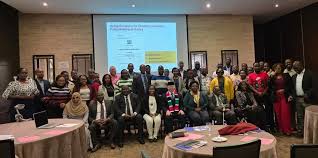
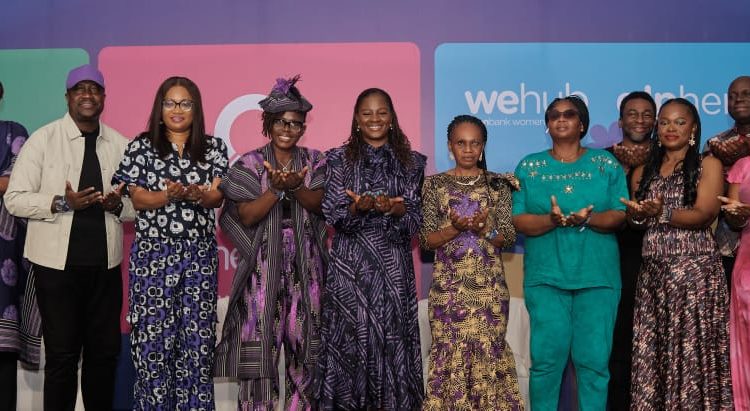
The centrepiece of Union Bank’s campaign was a flagship event held at The Stable, its multipurpose venue in Surulere, Lagos. The event convened women with disabilities, caregivers, supporting organisations, and advocates for dialogue, mentorship, and resource sharing in an environment specifically designed around their needs and experiences.
Critically, the event was not simply about talking about women with disabilities. It brought them into the room as participants, speakers, and advocates. Among the organisations represented were the Deaf International Foundation led by founder and executive director Funmilola Ogunro and the Nigeria Association of the Blind, represented by Southwest Coordinator Adenike Olorundare and Lagos Chapter Women Leader Olubukola Salako.
Union Bank’s senior leadership was visibly present. The bank’s MD and CEO, Yetunde Oni, attended alongside the Chief Talent Officer, Head of Corporate Banking, Head of Retail and SME Business, Chief Brand and Marketing Officer, and Regional Executive for Business Banking Southwest and Lagos. This level of leadership presence signals that the campaign was not delegated to a CSR department but carried executive endorsement.
The Campaign Theme and What It Signals
The global theme for International Women’s Day 2026 was ‘Give to Gain.’ Union Bank’s interpretation of this theme through the lens of disability inclusion is both creative and pointed. The bank’s framing was explicit: true inclusion requires going further, reaching deeper, and serving those who have waited longest for a seat at the table.
This framing acknowledges something that many corporate inclusion initiatives avoid saying directly: that women with disabilities are not simply a subset of women facing similar challenges to their non-disabled peers with added complications. They are a population that has been systematically excluded from the conversations, resources, and opportunities that even mainstream women’s empowerment programmes have increasingly reached. Centring them specifically is an act of recognition that their exclusion is structural, not incidental.
The Persistent Barriers Women with Disabilities Face in Nigeria
The backdrop to Union Bank’s campaign is a reality that Nigeria’s disability community knows well. Women with disabilities in Nigeria face what researchers describe as intersecting discrimination marginalised both because of their gender and because of their disability, in a social environment where both carry significant stigma.
Access to financial services is one of the most concrete manifestations of this exclusion. Banking halls that are physically inaccessible to wheelchair users, ATMs that cannot be used by persons with visual impairments, financial literacy programmes that do not provide information in accessible formats, and loan processes that do not accommodate sign language interpretation, these are not abstract concerns. They are daily realities that lock women with disabilities out of the formal economy.
Beyond banking, the economic exclusion is broad. Women with disabilities in Nigeria have lower rates of formal employment, lower access to business development support, and lower representation in entrepreneurship programmes compared to both non-disabled women and men with disabilities. The compounding effect of gender and disability discrimination creates a poverty trap that single-issue interventions cannot address.
What Corporate Nigeria Can Learn From This Campaign
Union Bank’s campaign offers a practical model for other Nigerian corporates considering disability inclusion as part of their gender equity work. The key elements are: choosing specificity over generality by focusing on a defined group rather than disability in the abstract; bringing disability organisations into the room as partners and participants rather than as props or recipients; ensuring executive-level visibility and commitment; and framing inclusion as a business imperative rather than a charitable act.
The bank’s statement that it is committed to ensuring a seat exists and that it is built to last signals an intent to sustain this engagement beyond March. AblePath Africa will be watching to see whether Union Bank follows through with concrete products, services, or employment initiatives that translate the campaign’s language into lasting change for women with disabilities in Nigeria.
📌 The Deaf International Foundation (Funmilola Ogunro, Executive Director) and the Nigeria Association of the Blind are two organisations working to advance the rights of deaf and blind women in Nigeria. Reach out to them directly if your organisation wants to partner on disability inclusion work.
Source: Megastar Magazine, 11 March 2026 | Union Bank of Nigeria official communications
For AblePath Africa readers in Nigeria’s corporate sector: disability inclusion is not just the right thing to do. It is a market opportunity. The more than 27 million Nigerians living with disabilities represent an underserved customer base, workforce pool, and innovation opportunity that Nigerian businesses can no longer afford to ignore.